Education and Scientific Learning
“O’Lord! Increase my knowledge”
(Qura’n;20:114)
“…His servants who possess knowledge fear Allah;..” (Qura’n;35:28).
Introduction:
Human
being has been blessed with many qualities; some are evident while others are
latent. The most important quality is the ability of human to learn and use the
knowledge to his/her advantage. Allah says in Qur’an: “And He (God) imparted in
to Adam the knowledge of the names of all things; then He placed them before
the angels and said: "Tell Me the nature of these if ye are
right.”(Qur’an;2:31). From
this it may legitimately be inferred that the “the knowledge of all names”
denotes here man’s faculty of logical definition and, thus of conceptual
thinking. God created and sent the human to this world by imparting the
knowledge, intelligence and the faculty of rationale thinking to exploit all
which is in the heaven and earth to his benefit. This makes human superior
specie to all others even to angels, to enable him to be His vicegerent. It is
now up to the man to prove himself worthy of His trust by making use of these
faculties to explore the mysteries of the nature and the world (made
subservient to him) to get benefited in this world and hereafter. It is
mentioned in Qur’an: “He is the One Who spread out the earth and placed thereon
mountains and rivers, created fruits of every kind in pairs, two and two and
makes the night cover the day. Certainly in these things there are messages for
those who think.”(Qur’an;13:3). “He has created the heavens and the earth to
manifest the Truth; Exalted be He above they all that they associate (with
Him).”(Qur’an;16:2), “Surely it is Allah Who causes the seed and the
fruit-stone to split and sprout. He brings forth the living from the dead and
the dead from the living. It is Allah, Who does all this; then why are you
being misled?”(Qur’an;6:95). “It is He Who has made the earth manageable to
you, to walk through its tracts and eat of His provided sustenance. To Him is
the return at resurrection.” (Qur’an;67:15). Man has managed to make paths
through deserts and over mountains: through rivers and seas by means of ships;
through the air by means of airways; he has made bridges and tunnels and other
means of communication. But this he has only been able to do because Allah has
given him the necessary intelligence to acquire knowledge and has made the earth
tractable through it.
In the
first revelation of Qur’an, the acquisition of knowledge is emphasized:
“Recite: In the name of thy Lord who created,”(Qur’an;96:1); “.. Are the
knowledgeable and the ignorant equal? In fact, none will take heed except the
people of understanding.”(Qur’an;39:9). Islam encourages thinking and
acquisition of knowledge, which also include the scientific knowledge
(Qur’an;3:190-191). The Qur’an uses word ‘Ulema’ only once, in the context of
scholars, who ponder over the natural phenomena (scientist): “Do you not see
that Allah sends down rain from the sky with which We bring forth fruits of
various colors? Similarly, in the mountains there are streaks of various shades
including white, red, jet-black rocks. Likewise men, beasts and cattle have
their different colors. In fact, only those among His servants who possess
knowledge fear Allah; surely Allah is All-Mighty,
All-Forgiving.”(Qur’an;35:27,28).
Islam
is the faith based upon knowledge and thinking with wisdom, for it is ultimately
knowledge of the Oneness of God combined with faith and total commitment to Him
that saves man in this world and hereafter. Allah says in Qur’an: “Call people
to the Way of your Lord with wisdom and best advice, and reason with them, if
you have to, in the most courteous manner: for your Lord knows best who strays
from His Way and He knows best who is rightly guided.”(Qur’an;16:125).
The
Qur’an is full of verses urging man to use his intellect, to deliberate, to
think and to know, for the objective of human life is to ascertain the Truth,
which could be achieved by recognizing and exploring the sings of Allah all
around: “Surely in the heavens and the earth there are signs for the true
believers.”(Qur’an;45:3), “Of His signs, one is that He created you from dust;
and then behold you men are scattered throughout the earth. And of His signs,
another one is that He created for you mates from among yourselves that you may
find comfort with them, and He planted love and kindness in your hearts; surely
there are signs in this for those who think about it. And yet others of His
signs are the creation of the heavens and the earth, and the difference of your
languages and colors; surely there are signs in this for the
knowledgeable.(Qur’an;30:20-22). In order to understand the ‘signs’ in the
‘creation of the heavens and the earth’ one has to be ‘knowledgeable’. The main
branches of knowledge which can be acquired by human through intellect,
facilities and senses granted to him by God, include; Logic, Mathematics, Sciences
(Physical, Behavioral, Social, Earth, Biological, Medicine, and Technological
Sciences), Humanities and Philosophy. The knowledge in one or more of these
branches can be attained by the study of nature and study in respective fields
of knowledge by any believer or non believer alike.
For the
believer Qur’an and Sunnah is the main source of spiritual knowledge with signs
of other knowledge, the other source is the knowledge of these branches
attained and preserved by humanity over a long period of human history. This
knowledge is gained and retained through the intellect endowed to man by Allah
at the time of his creation as mentioned at verse 2:31 in Qur’an. In case of a believer, the understanding
of ‘signs’ will strengthen his faith, while a non believer will be inclined to
fully comprehend the reality of Islam. Qur’an has repeatedly drawn the
attention of man towards the signs of God at;
3:190, 6:37,38 & 100, 17:12, 36:41-44, 71-76, 40:80,81, 56:63-67 and
also at many other places. Allah says in Qur’an: “He also made subservient to
you whatever is between the heavens and the earth; all from Himself. Surely
there are signs in this for those who think.”(Qur’an;45:13), “Will they not
then ponder on the Qur'an?..”(Qur’an;4:82). Hence it becomes obligatory for the
believers (both men and women) to acquire the knowledge of this world along
with the religious sciences to understand the signs of Allah and to harness the
powers of nature at ‘heaven and earth; made subservient’ to man to derive
benefit out of them. Ignoring the knowledge of religious sciences at the cost
of other knowledge or vice versa may be against the spirit of Qur’an
(45:13,13:3).
The
knowledge of din (faith) is useful for success in this as well the next world,
while the knowledge of dunya (world) is essential for this world; hence
knowledge of din is fundamental. This is the reason that from very beginning
the religious and scientific knowledge were combined. The din (faith) and dunya
(worldly affairs) were not separate entities. This helped to flourish in
knowledge. Thus the scholars have always enjoyed respect in the Islamic
societies. The emphasis is on acquisition of useful and beneficial knowledge.
Physical and Spiritual Knowledge:
Physical
and Spiritual Nature of Human: The scholars of theology and theosophy are of
the opinion that: The man is blessed with two natures of intellect, firstly the
animal or ‘Physical Nature’ which include intellect and senses, secondly the
invisible ‘Spiritual Nature’ which has Spiritual Intellect [Spirit is something
metaphysical, which also possess the spiritual centre of intellect, the Heart
(Qalb, Ruh), hearing and sight etc. The Arabic word Qalb means heart, the
bodily organ, but it is understood in similar other meanings given in Oxford
Dictionary as; The mind, intellect; the seat of one's inmost thoughts and
secret feelings; the soul, the seat of perception, understanding, or (rarely)
memory]. It is this Spirit which differentiate human from animals, making the
human superior to all other creatures including angels. Allah says: “Behold
when your Lord said to the angels: "I am about to create a man from clay:
then when I have fashioned him and breathed of My spirit into him, kneel down
and prostrate yourselves before him."( Qur’an;38:71-72), “then He
fashioned him (Adam) in due proportion and breathed into him of His spirit. He
gave you ears, eyes and heart; yet you are seldom thankful. (Qur’an;32:9).
Knowledge
of Spirit:
Not
much information is available about Spirit (Ruh), Narrated Abdullah: While I
was going with the Prophet (peace be upon him) through the ruins of Medina and he was
reclining on a date-palm leaf stalk, some Jews passed by. Some of them said to
the others: Ask him (the Prophet) about the spirit. Some of them said that they
should not ask him that question as he might give a reply which would displease
them. But some of them insisted on asking, and so one of them stood up and
asked, "O Abul-Qasim! What is the spirit?" The Prophet remained
quiet. I thought he was being inspired divinely. So I stayed till that state of
the Prophet (while being inspired) was over. The Prophet then said, “They put
you questions about Ar-Ruh (the Spirit). Tell them: "The Spirit is at my
Lord’s command and knowledge of it but a little given to you (O mankind)"(Qur’an;17:85).(Sahih
Al Bukhari Hadithn Number:1.127).
The man can receive the different forms of
knowledge through these two types of intellect or mediums. In Islamic Theosophy
expressions, there are two main types of Knowledge; The Knowledge of Materials
[Ilmul Ajsam-(Physics)] and Knowledge of Faith [Ilmul Adyan (Metaphysics)]
related with spirituality, morality and religious matters.
Acquired
Knowledge:
The
initial knowledge provided to Adam by God (Qur’an;2:31) is the human source of knowledge which can be gained
or transmitted through the physical senses and intellect provided to man
(senses of animal nature of human). This knowledge is imbedded in every human
like the seed of a plant which expire if kept dormant for long period under
unfavorable environments or if planted, grows slowly or quickly according to
the condition of soil and availability of other things like water, light,
suitable temperature, air etc. This knowledge is revived or gained through
experience, observation, experimentation and rational thinking called ‘Acquired
Knowledge’. Man apart from the Knowledge of Materials also tried to resolve the
mysteries of nature, like life, life after death and creation of universe, by
using his intellect and experience. Hence the philosophers like Plato came up
the theory of ‘Ideas’ a basis of ‘Idealism’ while Aristotle opposed it with the
theory of ‘Realism’. The human desire to organize life in this world resulted
in the evolution of various branches of knowledge like physical and social sciences,
which have reached new heights of development during last three centuries.
Islam encourages man to capitalize and excel in ‘Acquired Knowledge’ as
blessings of God, which, besides human development also help to understand and
assimilate the spiritual knowledge, delivered by His Messenger after his
departure.
The
Revealed Knowledge:
The
other source of knowledge is ‘The Revealed Knowledge’, which can not be
acquired by every one through his efforts, but it is ‘Revealed’ through the
blessings of God to His chosen people infallible in character called His
Messengers, Apostles and Prophets like Adam, Noah, Abraham, Isaac, Jacob,
Ishmael, Moses, Jesus and lastly Muhammad (peace be upon them all). In fact
there has been apostle of God sent for every nation.
The Revealed Knowledge is transmitted through
the medium of ‘Spirit’ directly at the Qalb or (Ruh) (Heart or Soul) of the
recipients called Wahi (Revelation). Allah says: “Say, "The Holy Spirit
(Gabriel) has brought it (revelation) down from your Lord with truth to
strengthen the faith of the believers, and to give guidance and good news to
those who have surrendered themselves to God.”(Qur’an;16:102). The Apostles
convey the message received through Wahi (Revelation) to the people through the
physical senses (speaking and hearing) which is also transmitted to the Qalb
(Spiritual Heart, Ruh) of the recipient. Those whose spirit (Qulb, ruh) is
awake, they will listen, see and receive the spiritual light and become Muslims
while others remain unbelievers. Allah says: “O Muhammad, declare: "O
mankind! The truth has come to you from your Lord! He that follows guidance (Right Way) follows
it for his own good, and he that goes astray does so at his own risk; for I am
not a custodian over you.”(Qura’n;10:108). “Those who deny Our Revelations are
deaf and dumb, living in many layers of darkness. Allah confounds whom He will,
and guides to the Right Way
whom He pleases”.(Qura’n;6:39),
“whose eyes had been under a veil from Remembrance of Me and who had been
unable even to hear.”(Qura’n;18:101). “Have you considered the case of such an
individual who has made his own desires as his god, and Allah having knowledge
let him go astray, and sealed his hearing and heart and drew a veil over his
sight? Who is there to guide him after Allah has withdrawn His guidance? Will
you not learn a lesson?”(Qura’n;45:23). “Is the one whose heart Allah has
opened to Islam and is walking in the light from his Lord like the one who has
learned no lesson and is still a non-Muslim. So woe to those whose hearts are
hardened against the remembrance of Allah! They are clearly in
error.”(Qura’n;39:22).
Revelation
(Wahi):
Wahi
(Revelation) are of two types; The Open Revelation (Wahi Jalli) and the Concealed Revelation (Wahi Khaffi). The
Open Revelation (Wahi-Jalli) are descend directly at the spiritual heart (Qalb,
Ruh or Soul) of Apostles of God normally through Archangel Gabriel. These are
completely safe and protected form any interference by Satan or nafs. Narrated
Ubadah ibn as-Samit: When wahi (inspiration, revelation) descended upon Allah's
Messenger (peace be upon him), he felt a burden on that account and the colour
of his face underwent a change, he lowered his head and so lowered his
Companions their heads, and when (this state) was over, he raised his
head.(Sahih Muslim Hadith Number.1085 &1086).
After Prophet Muhammad (peace
be upon him) the Open Revelation (Wahi-Jalli) stands discontinued. The
Concealed Revelation (Wahi Khaffi) may be received by the Apostles in pure
form, while other people may also receive it but it may be interfered by Satan
and nafs (self conscious). It could be in the form of ‘True Dreams’ or ‘Ilham’,
(inspiration) or intuition in the form of ‘Extrasensory Perceptions’ (ESP),
the perception that occurs independently of the known sensory processes.
Usually included in this category of phenomena are telepathy, or thought
transference between persons; clairvoyance, or supernormal awareness of objects
or events not necessarily known to others; and precognition, or knowledge of
the future. Scientific investigation of these and similar phenomena dates from
the late 19th century. The inspiration to Mary and Mother of Moses have been
mentioned in Qur’an:“We sent to her (Mary) Our angel and he appeared before her
as a man in all respects.(Qur’an;19:17).
He said: "Don't be afraid, I am merely a messenger from your Lord to tell
you about the gift of a holy son"..(Qur’an;19:19). “when We revealed Our will to (O Moses) your
mother saying: Put your child into the chest and throw the chest into the
river..”(Qur’an;20:38-39).
Certainty
of Knowledge (Yaqin):
Certainty
(Yaqin) of Knowledge is as perceived by men, and understood with reference to
their psychology and experience. There are three kinds of yaqin (certainty of knowledge), Firstly;
there is the probability or certainty resulting from the application of man's
power of judgment and his appraisement of evidence, which is ilmulyaqin,
certainty by reasoning or inference, or certainty of mind: “Nay were ye to know
with certainty of mind (ilmulyaqin) (Ye would beware!). Ye shall certainly see
Hell Fire!”(Qur’an;102:5-6). Secondly; then there is the certainty of seeing
something with our own eyes. "Seeing is believing." This is
'ain-ul-yaqin, certainty by personal inspection.(Qur’an;102:7). Thirdly; the absolute Truth, with no possibility of
error of judgment or error of the eye, (which stands for any instrument of
sense-perception and any ancillary aids, such as microscopes etc.). This
absolute Truth is the haqq-il-yaqin : “But verily it is Truth of assured
certainty.”(Qur’an;69:51). The first certainty of mind (ilmulyaqin) or
inference mentioned at (Qur’an;102:5-6), one hear from someone, or infer from
something known: this refers to human state of mind. If man instructs his mind
in this way, he should value the deeper things of life better, and not waste
all the time in ephemeral things. But if he does not use the reasoning
faculties now, he shall yet see with own eyes, the Penalty for his sins. It
will be certainty of sight. He shall see Hell, the absolute certainty of
assured Truth (Qur’an;69:51). That is not liable to any human error or
psychological defects.

Word of
God & Work of God:
The
development and advancement in the humanly ‘Acquired Knowledge’ of metaphysics
through Philosophy is called ‘Ilmul Kalam’ while the last Revealed Knowledge is
available in the form of Qur’an called ‘Ilmul Qur’an’. The Qur’an is the ‘Word of God’ while this
world is the ‘Work of God’. An effort is made to reconcile these two with the
Acquired Knowledge. The Revelations (Wahi), primary source of knowledge has
ceased at its zenith in the form of Qur’an, but Philosophy (Ilmul Kalam)
continues its slow journey of forward movement which should guide the humanity
with in the bounds of the eternal guidance provided in Qur’an. It is a very
sensitive issue because ‘The Unlimited’ can not be ‘fully conceived or
comprehended’ by the human intellect through Acquired Knowledge only, which is limited, so the Qur’an should be
followed as Commands of God made easily comprehensible in the light of the
Sunnah of last Prophet (peace be upon him). Allah says: “Will they not ponder
upon the Qur'an? Are there locks upon their hearts?(Qur’an;47:24). “This Book
(Al-Qur'an) which We have sent down to you (O Muhammad) is highly blessed, so
that they may ponder upon its verses and the men of understanding may learn a
lesson from it”.(Qur’an;38:39).
However
It is evident that for success in this and hereafter, the Muslims should seek
to excel in ‘Acquired Knowledge’ with inspiration from the primary source
combined with the known knowledge of Qur’an and Sunnah will facilitate as ‘The
Men of Understanding’ to ‘Ponder’ Qur’an fulfilling the command of God. It is
through this process that the Tawhid (monotheism) is infused in learning that
help in batter understanding. Some of
the mysteries of nature resolved by scientists recently like, the creation of the universe by ‘The Big
Bang’(Qur’an;21:30, 41:11), creation of all life from water (Qur’an;21:30,
25:54) and many more are found to be mentioned in Qur’an fourteen centers
ago.
The
Traditions (Hadith) of Prophet (PBUH):
The
Traditions (Hadith) of Prophet (peace be upon him) are full of references to
the significance of knowledge. Such sayings of the Prophet as; "Seek
knowledge even in China", "Seek knowledge from the cradle to the
grave", and "Verily the men of knowledge are the inheritors of the
prophets", “Striving after knowledge is a sacred duty (faridah) for every
man and woman who has surrendered himself or herself to God”(Ibn Majah); are
well known to Muslims urging them to seek all types of useful knowledge (not
restricted to religious sciences only) from whatever sources it might be
found. Apostle of Allah (peace be upon
him) is reported to have said: “If anyone travels on a road in search of
knowledge, Allah will cause him to travel on one of the roads of Paradise. The angels will lower their wings in their
great pleasure with one who seeks knowledge, the inhabitants of the heavens and
the Earth and the fish in the deep waters will ask forgiveness for the learned
man. The superiority of the learned man over the devout is like that of the
moon, on the night when it is full, over the rest of the stars. The learned are
the heirs of the Prophets, and the Prophets leave neither Dinar nor Dirham,
leaving only knowledge, and he who takes it takes an abundant portion.”(Sunan
of Abu Dawood, Hadith:1631).
y Abu
Hurayrah: Allah's Messenger (peace be upon him) said: “The knowledge from which
no benefit is derived is like a treasure out of which nothing is spent in the
cause of Allah.”(Al-Tirmidhi Hadith.280). Narrated by Abu Hurayrah: Allah's
Messenger (peace be upon him) said: “When a man dies, his acts come to an end,
but three (acts), recurring charity, or knowledge (by which people) benefit, or
a pious son, who prays for him (for the deceased)”. (Sahih Muslim Hadith. 766).
Role of
Experts in Technical Knowledge:
Prophet
Muhammad (peace be upon him), basically conveyed guidance of Allah to the
mankind. As far as knowledge of this world, the opinions of expert in
particular field be made use of: Narrated by Anas ibn Malik & Aisha;
Allah's Messenger (peace be upon him) happened to pass by the people who had
been busy in grafting the trees. Thereupon he said: If you were not to do it,
it might be good for you. (So they abandoned this practice) and there was a
decline in the yield. He (the Prophet) happened to pass by them (and said):
What has gone wrong with your trees? They said: You said so and so. Thereupon
he said: You have better knowledge in the affairs of the world. (Sahih Muslim
Hadith.1101).
Significance
of Acquisition of Knowledge:
Narrated
by Anas ibn Malik: The Prophet (peace be upon him) said: He who issues forth in
search of knowledge is busy in the cause of Allah till he returns from his
quest. (Al Tirmidhi Hadith.420). Abu
Hurayrah Narrated with reference to Allah's Apostle (peace be upon him) as
saying: “--He who treads the path in search of knowledge, Allah will make that
path easy, leading to Paradise for him and those persons who assemble in one of
the houses of Allah (mosques), recite the Book of Allah and learn and teach the
Qur'an (among themselves)…”(Sahih Muslim Hadith.1245). The
importance of education is evident from the historical fact that, the pagan prisoners
of war, captured by Muslims in the battle of Badr were asked to teach the
illiterate Muslims to earn their freedom. Obviously the pagans were not to
teach religious knowledge! Most of the companions also possessed a high
standard of knowledge and wisdom, narrated by Ali ibn Abu Talib: Allah's
Messenger (peace be upon him) said, "I am the house of wisdom and Ali is
its door."(Al-Tirmidhi Hadith, 6087). “Yahya related to me from Malik that
he heard that Luqman al-Hakim made his will and counseled his son, saying,
"My son! Sit with the learned men and keep close to them. Allah gives life
to the hearts with the light of wisdom as Allah gives life to the dead earth
with the abundant rain of the sky."(Al-Muwatta Hadith 59.1). Like men,
women are equally required to excel in the pursuit of education and knowledge.
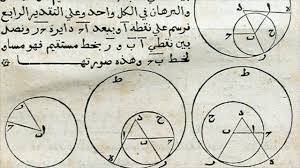
Theological
& Scientific Knowledge linked:
The
knowledge of din is essential for attaining deep faith, its importance is
evident from the fact that while proceeding to war when every head counts, Allah
says: “It is not proper that all the believers take the filed (in time of war).
From every group with in their midst some should refrain form going for the
war, so that they may obtain the understanding of deeper knowledge of the Faith
(Al-Islam), and teach their brethren when they return to them so that they may
guard themselves (against evil)”.(Qur’an;9:122). However the pursuit of other
branches of knowledge is not only necessary for good living but also adds to
the attainment of faith and batter understanding of the message of Islam.
Qur’an does not draw any dividing line between the spiritual and the worldly
concerns of life but, rather, regards them as different aspects of one and the
same reality. In many of its verses, the
Qur’an calls upon the believer to observe all nature and to discern God’s
creative activity (Qura’n;10:5, 2:164, 30:46, 40:57, 50:7 & many more) in
its manifold phenomena and ‘laws’ , as well as to mediate upon the lessons of
history (Qura’n;22:46,27:69,29:20, 30:9) with a view to gaining a deeper
insight into man’s motivations and the
innermost sprigs of his behaviour; and thus, the Qur’an itself is characterized
as addressed to ‘those who think’ (Qura’n;47:24, 38:29).
In
short, intellectual activity as such is postulated as a valid way to batter
understanding of God’s will and - if perused with moral consciousness- as a
valid method of worshiping God. This Qur’anic principle has been emphasized in
many authentic sayings of Prophet mentioned at:
Abu Dawood, Hadith:1631, Sahih Muslim Hadith. 766, Al Tirmidhi
Hadith.420 and Sahih Muslim Hadith.1245.
Consequently, the obligation of the believers to devote themselves to
acquiring a deeper knowledge of the Faith and to impart its results to their
fellow-believer relates to every branch of knowledge as well as to its
practical application.
INDEX:


