Featured post

Index

View my Flipboard Magazine. Read books Online here, or Download  as <PDF> or   < Word > UNIVERSE SCIENCE, GOD : ...

Showing posts with label Education. Show all posts

Index


Read books Online here, or Download as <PDF> or  <Word >
CREATOR 
CREATION  
GUIDANCE  
LEGACY OF ABRAHAM: ISLAM  
THE LAST MESSENGER MUHAMMAD (PBUH)  


Chapter-6: Islamic Civilization & Human Development

THE LEGACY OF ABRAHAM-ISLAM-6


Islam encourages thinking and acquisition of knowledge, which also include the scientific knowledge (Qur’an;3:190-191). The Qur’an uses word ‘Ulema’ only once, in  the context of  scholars, who ponder over the natural phenomena (scientist): 
“Do you not see that Allah sends down rain from the sky with which We bring forth fruits of various colors? Similarly, in the mountains there are streaks of various shades including white, red, jet-black rocks. Likewise men, beasts and cattle have their different colors. In fact, only those among His servants who possess knowledge fear Allah; surely Allah is All-Mighty, All-Forgiving.”(Qur’an;35:27,28). 
Hence the Islamic civilization enormously contributed towards the well being of humanity through advancements in all other fields including science and technology. 
The contributions in the advancement of knowledge by the Islamic scholars, scientists and philosophers are enormous, which have been summed up by Encyclopedia Britannica: 

“The madrasahs (Islamic seminaries) generally offered instruction in both the religious sciences and other branches of knowledge. The contribution of these institutions to the advancement of knowledge was vast. Muslim scholars calculated the angle of the ecliptic; measured the size of the Earth; calculated the precession of the equinoxes; explained, in the field of optics and physics, such phenomena as refraction of light, gravity, capillary action, and twilight; and developed observatories for the empirical study of heavenly bodies. They made advances in the uses of drugs, herbs, and foods for medication; established hospitals with a system of interns and externs; discovered causes of certain diseases and developed correct diagnoses of them; proposed new concepts of hygiene; made use of anesthetics in surgery with newly innovated surgical tools; and introduced the science of dissection in anatomy. They furthered the scientific breeding of horses and cattle; found new ways of grafting to produce new types of flowers and fruits; introduced new concepts of irrigation, fertilization, and soil cultivation; and improved upon the science of navigation. In the area of chemistry, Muslim scholarship led to the discovery of such substances as potash, alcohol, nitrate of silver, nitric acid, sulfuric acid, and mercury chloride. It also developed to a high degree of perfection the arts of textiles, ceramics, and metallurgy.” It further adds: “The decline of Muslim scholarship coincided with the early phases of the European intellectual awakening that these translations were partly instrumental in bringing about.  
The translation of most Islamic works into Latin during the 12th and 13th centuries had a great impact upon the European Renaissance. As Islam was declining in scholarship and Europe was absorbing the fruits of Islam's centuries of creative productivity, signs of Latin Christian awakening were evident throughout the European continent. 
The 12th century was one of intensified traffic of Muslim learning into the Western world through many hundreds of translations of Muslim works, which helped Europe seize the initiative from Islam when political conditions in Islam brought about a decline in Muslim scholarship. By 1300 C.E when all that was worthwhile in Muslim scientific, philosophical, and social learning had been transmitted to European schoolmen through Latin translations, European scholars stood once again on the solid ground of Hellenistic thought, enriched or modified through Muslim and Byzantine efforts.….. 
Most of the important Greek scientific texts were preserved in Arabic translations. Although the Muslims did not alter the foundations of Greek science, they made several important contributions within its general framework. When interest in Greek learning revived in Western Europe during the 12th and 13th centuries, scholars turned to Islamic Spain for the scientific texts. A spate of translations resulted in the revival of Greek science in the West and coincided with the rise of the universities. Working within a predominantly Greek framework, scientists of the late Middle Ages reached high levels of sophistication and prepared the ground for the scientific revolution of the 16th and 17th centuries.” According to Will Durant, the Western scholar, “For five centuries , from 700 to 1200 (C.E), Islam led the world in power, order and extent of government, in refinement of manners, scholarship and philosophy”.

The Paradox:

Islam has been completed as a way of life (Din), through Qur’an and Sunnah of the Prophet (peace be upon him). At the time of Farewell Pilgrimage (632 C.E) at Makka, it was Revealed to the Prophet (peace be upon him): “..Today I have perfected your religion for you, completed my favor upon you and approved Al-Islam as a Din (way of life for you) (Qur’an;5:3). the Prophet (peace be upon him) is reported to have lived for eighty one days after this revelation, he did not receive any new order or commandments regarding permissible or prohibitions. Hence Islam does not require innovations in its doctrine (fundamentals of faith & pillars of Islam), teachings and worship rituals. The challenges of modern age can adequately be met by the competent scholars through Ijtihad; which is the ‘exercise of rational judgment with independent reasoning’ with in the framework of Qur’an and Sunnah. Islam emphasizes learning the religious knowledge along with the other branches of knowledge. People involved in learning of religious sciences have been exempted for participation in war. Allah says: “It is not proper that all the believers take the filed (in time of war). From every group with in their midst some should refrain from going for the war, so that they may obtain the understanding of deeper knowledge of the Faith (Al-Islam), and teach their brethren when they return to them so that they may guard themselves (against evil)”(Qur’an;9:122). Muslims as inheritors of Qur’an are obliged to learn the message to pass on to others: “We have given the Book as an inheritance to those of Our servants (Muslims) whom We have chosen..”(Qur’an;35:32). Prophet Muhammad (peace be upon him) in his life time  himself prepared the pious companions in the knowledge of Islam, who very keenly asked the questions to clarify their doubts. Apart from four rightly guided caliphs, there were many scribes of Qur’an like Zaid bin Thabit, knowledgeable men like Ibn Abbas and Abdullah bin Umar. The list of such learned companions is very long, running in to hundreds. The treasure of valuable traditions of Prophet Muhammad (peace be upon him) was carried from teacher to pupil, father to son and so on. It was segregated through an elaborate process known as the Science of Hadith and compiled in the form of books of authentic traditions (Ahadith) lead by Muhammad ibn Isma'il al- Bukhari (810-870 C.E), Muslim ibn al-Hajjaj (817-875 C.E), Abu Da`ud (817-889 C.E), Tirmidhi (d 892 C.E), Nasa’i (830-915 C.E) and Ibn Maja (824-886 C.E).
The traditional orthodox Islamic scholars (Ulema) of all schools of thought have always played very important role in up keep of Muslims and spread of message of Islam as guardians of treasure of knowledge. However they developed tendency to remain confined to their respective schools of thought, enjoying considerable influence over their followers. This Scholasticism (the close adherence to the methods, traditions, and teachings of a sect or school) became impediment in the growth of progressive faith of Islam to meet the challenges of modern developments. 

Many scholars, to name few like: Ibn Hazm (d 1064), Ghazzali (1058-1111) Zamakhshri (d 1144 C.E), Fakhr al Din Razi (d 1209 C.E), Ibn Taymiyah (1263-1328), Ibn Kathir (d 1373 C.E) made valuable contributions to advance the Islamic scholarship and knowledge. Besides some isolated efforts here and three, overall there has been stagnation in the learning and development process with emphasis on conforming to the existing knowledge base compiled back in 8th & 9th centuries C.E. Islam encourages thought process, Allah says: “This Book (Al-Qur'an) which We have sent down to you (O Muhammad) is highly blessed, so that they may ponder upon its verses and the men of understanding may learn a lesson from it.”(Qur'an;38:39). Though the efforts made by scholars like Muhammad Ibn Abdul Wahhab (1703-1792 C.E) and Shah Wali Ullah (1703-1762 C.E) to revive the original sprit are noteworthy, however it must be kept in view that the main thrust of the efforts of Ulema have been mostly directed towards safeguarding and preserving the dogmatic, ritualistic and institutional structure of Islam writes Dr.Israr Ahmad: As regards fulfilling the requirements and demands of reviving Islam in the present Westernized milieu, and re-establishing the ascendancy of the politic-socio-economic system of Islam, they are often unaware of even the existence of such need. Therefore, the services of the Ulema can be seen as a continuation of the efforts – like the services of present day Ulema are mainly focused on preservation rather than renascence.

The respectable ancestors were justified in narrowing down their fields of activity because the cultural and legal system of Islam was still very much intact in those days, and the predominant need of their time was merely to preserve the religious faith in its original form and defend it against alien influences. As a result, all the past reformers concentrated their energies in the academic fields or at most in the moral and spiritual purification of common Muslims. None of them tried to launch any organized political or militant movement, as Prophet Muhammad (peace be upon him) had strict restrictions on such rebellion against Muslim rulers, as long as Shari’a was being enforced and no flagrant violation of Islam was being committed. 

It was not considered permissible to revolt even if the rulers are themselves wicked and oppressive. Therefore as soon as the situation was changed and non Muslims started to conquer and occupy Muslim lands the reformist efforts quickly turned in to armed struggles, prominent among them are the Mujahideen movement of Sayyed Ahmad Shaheed (1786-1831) in India, the Sanussi movement in Libya by Syyid Muhammad Ibn Ali As-Sanussi (1787-1859) and struggle against Italian occupation up to 1932, the Mahdist movement initiated by Muhammad Ahmad (1844-1885) to resist British invasion in Sudan. Imam Shāmil (1797-1871) struggled against Russians occupation of  Dagestan-Chechnya lasting for 25 years (1834-1859), which was again revived recently and goes on. The Afghan Jihad started in nineties, initially against Russians occupation, has turned against their benefactor US. The armed struggle in Palestine and Iraq against occupation forces, has also been colored by religious fervor. The recent misadventure by Israelis in Lebanon was thwart by Hizb-Allah, a militant out fit with religious spur.

It is obvious that even today the traditional Ulema are following in the footsteps of earlier reformers who had worked under completely different conditions. In other words traditional Muslim scholars have in general restricted themselves and their abilities within a rather narrow circle of activity which is essentially defensive rather than revivalist. Moreover even the task of defending Islamic doctrines is not being properly done by the Ulema as they are more often than not completely out of touch with developments in contemporary philosophical, social, and scientific thought. Imam Ghazzali (1058-1111 C.E) and Imam Ibn Taymiyah (1263-1328 C.E) were able to defeat the onslaught of Greek Philosophy and Aristotelian logic only after a careful and deep study of these invading ideas. Ibn Taymiyah employed a massive battery of philosophic, theological, and legal arguments against every shade of Bid’ah  (deviation) and called for a return to the beliefs and practices of the pious ancestors. Ahmad Sirhindi (1564-1624 C.E) a reformer in India reemphasized Qur’anic orthodoxy and tempering Hindu pantheistic influences and reasserting what he deemed the clear distinctions between God, man, and the world. Despite some impact, however, attempts of this kind remained isolated and were either ignored or reintegrated into the mainstream, until the coming of the modern reformers.

Unlike the doctrinal and philosophical movements of the Middle Ages, the modern movements were chiefly concerned with social and moral reform. The first such movement was the Wahhabi, named after its founder, Ibn Abd al-Wahhab, which emerged in Arabia in the 18th century and became a vast revivalist movement with offshoots throughout the Muslim world. The Wahhabi movement aimed at reviving Islam by purifying it of un-Islamic influences, particularly those that had compromised its original monotheism. Wahhabi theology and jurisprudence, based, respectively, on the teachings of Ibn Taymiyah and on the legal school of Ahmad ibn Hanbal, stress literal belief in the Qur'an and Hadith and the establishment of a Muslim state based only on Islamic law. Deoband School was founded in 1867 in India. The theological position of Deoband has always been heavily influenced by the 18th-century Muslim reformer Shah Wali Allah and the early 19th-century Indian Wahhabiyah, giving it a very puritanical and orthodox outlook. They have considerable influence in India, Pakistan and Afghanistan. It is generally perceived that the Taliban are influenced by them; but recently the Deoband has unanimously condemned and renounced all forms of terrorism declaring it to be un-Islamic.

Similarly in order to deal with the modern ideologies that are seeking to destroy the foundations of Islamic faith one needs to first clearly discriminate between what is and what is not against the spirit of the Qur’an. Afterwards one can refute that part of the invading ideologies which are in conflict with the Qur’anic spirit and to accept and incorporate after reconciling that part which is in accordance with its spirit in to a new and contemporary exposition of Islam without compromising on the fundamentals of Islam. Unfortunately this is not being done by the traditional scholars (Ulema). Dr.Israr Ahmed has rightly pointed out that; the role of Ulema today, instead of being that of an engine capable of propelling the ship of Islam forward, is actually nothing more than that of  a heavy anchor which prevents the ship from drifting away in any wrong direction. Although, under the present circumstances, even this is a commendable and substantial service, the fact remains that this is by no means enough. Another aspect of the activity of Ulema that needs correction is their usually strong emphasis on sectarian matters. A serious stagnation of thought along with dogmatism has set in, ever since the practice of Ijtihad (‘independent reasoning’ as opposed to ‘taqlid’-imitation) was done away with. The religious seminaries and Ulema of every sect are therefore spending most of their time and energies in defending and propagating their particular brands of dogma and rituals, often insisting that any variation in such matters is nothing short of apostasy. 

The doctrine of Takfir; is being used in the modern era in sanctioning violence against leaders of Islamic states who are deemed insufficiently religious. Takfir is a pronouncement that, some one is an unbeliever (kafir) and no longer a Muslim. It has become a central ideology of militant groups such as those in Egypt (now also in Afghanistan and adjoining tribal areas of Pakistan) which is claimed to be derived from the ideas of Sayyid Qutab. Mainstream Muslims and Islamic groups reject the concept as a doctrinal deviation. Leaders such as  Hassan al-Hudaybi (d.1977)  and Yousf al–Qaradawi reject ‘Takfir’ as un-Islamic and marked by bigotry and zealotry. Such narrow mindedness has exacerbated the evil of sectarianism and the resulting intolerance among the masses has led to a dangerous trend towards sectarian militancy.

The 19th and 20th-century reformers include Jamal ad-Din al-Afghani (1838-1897), Muhammad 'Abduh (1849-1905), but Muhammad Iqbal (1877-1938), is the first modern Muslim philosopher to deal with the intellectual challenges faced by Muslim Ummah in any comprehensive manner. He made an effort to address the real issues, by saying: “With the reawakening of Islam, therefore, it is necessary to examine, in an independent spirit, what Europe has thought and how far the conclusions reached there can help us in the revision and if necessary, reconstruction, of theological thought in Islam.” Abul Kalam Azad (1888-1958) initiated struggle for Islamic revival in India, but was discouraged due to opposition by some traditional Ulema, he got disillusioned and gave up the struggle to join nationalist politics of India. The twentieth century revivalist movement of Jama’at–e-Islami by Abul A’la Moududi (1903-1979) in India, later in Pakistan and Ikhwan al Muslimun in Egypt by Hassan  Al-Banna in 1928 have left lasting impact. Some organization operating in Algeria, Palestine, Lebanon, Chechnya, Philippines, Kashmir, Afghanistan, Central Asian Republics and elsewhere getting inspiration from these movements have developed radical out look, despite differences and disagreement in their approach, their significance can not be ignored. The Iranian revolution has its own importance and long term implications.

Due to lack of interest in religion by the Muslims in general and the rulers in particular, and later colonization of large part of Muslim world, the responsibility to acquire even basic knowledge of Islam was left to the religious scholars only. 

The Madaris which produced the scholars like Jabir ibn Hayyan, Abu Musa Al-Khwarizmi (Algorizm), Ibn Ishaq Al-Kindi (Alkindus), Ar-Razi, Al-Farabi,  Alhazen,  Al-Biruni,  Avicenna, Ibn Rushd (Averroes) and many more, by teaching all branches of knowledge including mathematic, algebra, astronomy, science and technology, medicine and social sciences along with religious sciences, philosophy and logic, teaching in Madaris was restricted to religious sciences only. This void created a new class of semi-literate religious scholars (mullah) devoid of knowledge of science, political, economic, social and other fields, so important for the smooth management of Muslim societies. Instead of leading the prayers (salah) and delivering the weekly sermon (khutba) on Fridays, the Muslim rulers encouraged and created a class of Mullahs (religious teachers, cleric) with priestly tendencies alien to Islam. Mostly these semi literate people are leading prayers in mosques as prayer leader (Imam), the function which can be performed by any Muslim. Since ordinary Muslims are dependent upon Mullah for the socio-religious functions like Nikah (marriage contract), reciting Adhan (prayer call) and Qur’anic verses in the ear of new born babies, washing the dead, burial prayer etc, the Mullah enjoys considerable influence over ordinary Muslims. While delivering sermons, specially on weekly Friday prayer congregation they do not hesitate to deliver talk on any topic be it politics, economics, social, sexual relations or international affairs without much background knowledge. 

No one among the audience, even an expert can dare to disagree or challenge the Mullah, because it may result in to dire consequences like being falsely declared as apostate, liable to be killed. Many such incidence have been reported in press. They are main contributor of sectarianism, intolerance and militancy, though there are some exceptionally knowledgeable and tolerant among them as well. The Russian occupation of Afghanistan resulted in creation of Mujahideen by USA. After Russians defeat, they started fighting among themselves for power, using the name of Islam. This resulted in emergence of Taliban,  the students of seminaries (madaris) which produce Mullah, a sort of professional priest. However it would be a great fallacy to brand all the seminaries (madaris) as source of trouble, most of them are doing good job. The taste of power has now made Taliban to continue fighting whosoever oppose them be it Russians, Americans or Muslim brothers. Talibanization has affected the tribal areas of Pakistan as well, they are using suicide bombers as tool for killing of innocent fellow Muslims in violation of Islamic principles. This menace can not be tackled by more violence. The reforms of religious seminaries (madaris), are overdue to include modern and technical education to the students along with the religious education. 

The graduates of these institutions should not only be looking for a mosque to earn their livelihood as Imam (priest), but may join other professions as well. There is strong need of policy shift at the national and international level to bring them to mainstream. The superfluous priesthood, (the form it has taken now) has to be restricted by the society whereby each Muslim should acquire normal religious knowledge to perform routine religious functions and reduce dependence on Mullah. A class of genuine religious scholars well versed in the theology and comparative religions should always be an asset for Ijtihad, guidance and education of the masses in their religious obligations. The massive religious mobilization by Tablighi Jama’t, by and large is playing an important role with in the larger process of Islamic Renaissance, with regards to its effort for the regeneration of fundamentals of faith among the masses, though some people express reservations. The efforts of non traditional scholars due to their rational appeal for the educated people is highly commendable. Many modern educated Muslims have been encouraged to come closer to Islam. 

The Broader Perspective:

A true Muslim adheres to the convictions, the religious beliefs; confession of faith or the basic article of Muslim faith and practices. The sources of the Islamic Creed are Qur'an and Sunnah (the life, actions and sayings of Prophet Muhammad, peace be upon him). Islam does not teach an exclusive doctrine, and is not meant exclusively for any single race or people. The Jews claimed their faith for themselves, and the Christianity in the beginning was a sect of the Jews. Even the modern organized Christian churches, though they have been, consciously or unconsciously, influenced by the Time-spirit, including the historical fact of Islam, yet cling to the idea of Vicarious Atonement, which means that all who do not believe; that Jesus died on Cross as a sacrifice to get rid the humanity of Original Sin, or who lived previously to the death of Christ are spiritually at a disadvantage. The approach of Islam is entirely different. Islam existed before the preaching of Muhammad (peace be upon him) on this earth: the Qur’an expressly asks Prophet Muhammad (peace be upon him) to follow the religion of Prophet Abraham, peace be upon him (Qur’an;16:123). It should be kept in view that the Night Journey of Prophet Muhammad (peace be upon him) from Mecca to Jerusalem, immediately preceding his Ascension to heavens (mair’aj), was evidently  meant to show that Islam is not a new doctrine but a continuation of the same divine message which was preached by the prophets of old, who had Jerusalem as their spiritual home, This view is supported by Traditions (quoted in Fath al-Bari VII, 158), according to which the Prophet (peace be upon him), during his Night Journey, also offered prayers at Yathrib, Sinai, Bethlehem, etc. His meeting with other prophets, mentioned in this connection, symbolize the same idea. The well-known Traditions to the effect that on the occasion of his Night Journey the Prophet (peace be upon him) led a prayer in the Temple of Jerusalem (Al Aqsa Mosque; The distant place of worship), in which all other prophets ranged themselves behind him, expresses in a figurative manner the doctrine that Islam, as preached by the Prophet Muhammad (peace be upon him), is the fulfillment and perfection of mankind's religious development. He was the last and the greatest of God's message-bearers. Islam is the best Din (way of life) because its teachings are not restricted to doctrinaire rhetoric but practical solutions for the problems of mankind at the individual and collective levels. Islam offers the best way of life because it is a  practical, universal religion not confined to any ethnic group or nationality but to the humanity, ever since its existence; hence also called the natural faith or the eternal faith. Therefore Islam should be viewed in its broader perspective as true legacy of Abraham for peace and salvation of humanity. Allah says: “Verily this Brotherhood of yours (Muslims) is a single Brotherhood and I am your Lord and Cherisher: therefore serve Me Alone”(Qur’an;21:92).

Related:
o   Faith & Reason  

EDUCATION, SCIENTIFIC LEARNING & ISLAM


Read online or download : Web, or PDF 

Islam is the complete way of life, (Din), encompassing spiritual, as well as social, political, economic and all other aspects of human life. Early Muslims excelled in knowledge in all the fields. They not only translated the Greek, Indian and other sources of knowledge but made significant additions and transferred to Europe through Muslim Spain. The main reason of decline of Muslim civilization is their lack on interest in learning and scholarship. Muslims are  now found to be mostly illiterate and ignorant. They are backward despite possessing treasures of rich culture, history, energy and other natural resources in abundance. 

This book is aimed to highlight the importance, which Islam attaches to attainment of knowledge so that Muslims may endeavour to regain their place among community of nations. 

CONTENTS:

Chapter-1: Pursuit Of Knowledge
  • Physical and Spiritual Knowledge
  • Theological & Scientific Knowledge 
Chapter-2: Islamic Education System  
  • Muslim Contributions in Medicine, Science & Technology 
  • Famous Muslim Scientists and Scholars:
  • Contribution of Great Muslim Women Scholars:
  • Influence of Islamic Learning in Renaissance of Western Civilization:
Chapter:3: Great Tragedy - Decline Of Muslim Scholarship
  • Harmony between Qur’an & Science: 
  • Redressing  The Great Tragedy

Related:

Chapter 1: Pursuit of Knowledge

Education and Scientific Learning


“O’Lord! Increase my knowledge” (Qura’n;20:114)
“…His servants who possess knowledge fear Allah;..” (Qura’n;35:28).

Introduction:

Human being has been blessed with many qualities; some are evident while others are latent. The most important quality is the ability of human to learn and use the knowledge to his/her advantage. Allah says in Qur’an: “And He (God) imparted in to Adam the knowledge of the names of all things; then He placed them before the angels and said: "Tell Me the nature of these if ye are right.”(Qur’an;2:31). From this it may legitimately be inferred that the “the knowledge of all names” denotes here man’s faculty of logical definition and, thus of conceptual thinking. God created and sent the human to this world by imparting the knowledge, intelligence and the faculty of rationale thinking to exploit all which is in the heaven and earth to his benefit. This makes human superior specie to all others even to angels, to enable him to be His vicegerent. It is now up to the man to prove himself worthy of His trust by making use of these faculties to explore the mysteries of the nature and the world (made subservient to him) to get benefited in this world and hereafter. It is mentioned in Qur’an: “He is the One Who spread out the earth and placed thereon mountains and rivers, created fruits of every kind in pairs, two and two and makes the night cover the day. Certainly in these things there are messages for those who think.”(Qur’an;13:3). “He has created the heavens and the earth to manifest the Truth; Exalted be He above they all that they associate (with Him).”(Qur’an;16:2), “Surely it is Allah Who causes the seed and the fruit-stone to split and sprout. He brings forth the living from the dead and the dead from the living. It is Allah, Who does all this; then why are you being misled?”(Qur’an;6:95). “It is He Who has made the earth manageable to you, to walk through its tracts and eat of His provided sustenance. To Him is the return at resurrection.” (Qur’an;67:15). Man has managed to make paths through deserts and over mountains: through rivers and seas by means of ships; through the air by means of airways; he has made bridges and tunnels and other means of communication. But this he has only been able to do because Allah has given him the necessary intelligence to acquire knowledge and has made the earth tractable through it.

In the first revelation of Qur’an, the acquisition of knowledge is emphasized: “Recite: In the name of thy Lord who created,”(Qur’an;96:1); “.. Are the knowledgeable and the ignorant equal? In fact, none will take heed except the people of understanding.”(Qur’an;39:9). Islam encourages thinking and acquisition of knowledge, which also include the scientific knowledge (Qur’an;3:190-191). The Qur’an uses word ‘Ulema’ only once, in the context of scholars, who ponder over the natural phenomena (scientist): “Do you not see that Allah sends down rain from the sky with which We bring forth fruits of various colors? Similarly, in the mountains there are streaks of various shades including white, red, jet-black rocks. Likewise men, beasts and cattle have their different colors. In fact, only those among His servants who possess knowledge fear Allah; surely Allah is All-Mighty, All-Forgiving.”(Qur’an;35:27,28).

Islam is the faith based upon knowledge and thinking with wisdom, for it is ultimately knowledge of the Oneness of God combined with faith and total commitment to Him that saves man in this world and hereafter. Allah says in Qur’an: “Call people to the Way of your Lord with wisdom and best advice, and reason with them, if you have to, in the most courteous manner: for your Lord knows best who strays from His Way and He knows best who is rightly guided.”(Qur’an;16:125).
The Qur’an is full of verses urging man to use his intellect, to deliberate, to think and to know, for the objective of human life is to ascertain the Truth, which could be achieved by recognizing and exploring the sings of Allah all around: “Surely in the heavens and the earth there are signs for the true believers.”(Qur’an;45:3), “Of His signs, one is that He created you from dust; and then behold you men are scattered throughout the earth. And of His signs, another one is that He created for you mates from among yourselves that you may find comfort with them, and He planted love and kindness in your hearts; surely there are signs in this for those who think about it. And yet others of His signs are the creation of the heavens and the earth, and the difference of your languages and colors; surely there are signs in this for the knowledgeable.(Qur’an;30:20-22). In order to understand the ‘signs’ in the ‘creation of the heavens and the earth’ one has to be ‘knowledgeable’. The main branches of knowledge which can be acquired by human through intellect, facilities and senses granted to him by God, include; Logic, Mathematics, Sciences (Physical, Behavioral, Social, Earth, Biological, Medicine, and Technological Sciences), Humanities and Philosophy. The knowledge in one or more of these branches can be attained by the study of nature and study in respective fields of knowledge by any believer or non believer alike.

For the believer Qur’an and Sunnah is the main source of spiritual knowledge with signs of other knowledge, the other source is the knowledge of these branches attained and preserved by humanity over a long period of human history. This knowledge is gained and retained through the intellect endowed to man by Allah at the time of his creation as mentioned at verse 2:31 in Qur’an. In case of a believer, the understanding of ‘signs’ will strengthen his faith, while a non believer will be inclined to fully comprehend the reality of Islam. Qur’an has repeatedly drawn the attention of man towards the signs of God at;  3:190, 6:37,38 & 100, 17:12, 36:41-44, 71-76, 40:80,81, 56:63-67 and also at many other places. Allah says in Qur’an: “He also made subservient to you whatever is between the heavens and the earth; all from Himself. Surely there are signs in this for those who think.”(Qur’an;45:13), “Will they not then ponder on the Qur'an?..”(Qur’an;4:82). Hence it becomes obligatory for the believers (both men and women) to acquire the knowledge of this world along with the religious sciences to understand the signs of Allah and to harness the powers of nature at ‘heaven and earth; made subservient’ to man to derive benefit out of them. Ignoring the knowledge of religious sciences at the cost of other knowledge or vice versa may be against the spirit of Qur’an (45:13,13:3).

The knowledge of din (faith) is useful for success in this as well the next world, while the knowledge of dunya (world) is essential for this world; hence knowledge of din is fundamental. This is the reason that from very beginning the religious and scientific knowledge were combined. The din (faith) and dunya (worldly affairs) were not separate entities. This helped to flourish in knowledge. Thus the scholars have always enjoyed respect in the Islamic societies. The emphasis is on acquisition of useful and beneficial knowledge.

Physical and Spiritual Knowledge:

Physical and Spiritual Nature of Human: The scholars of theology and theosophy are of the opinion that: The man is blessed with two natures of intellect, firstly the animal or ‘Physical Nature’ which include intellect and senses, secondly the invisible ‘Spiritual Nature’ which has Spiritual Intellect [Spirit is something metaphysical, which also possess the spiritual centre of intellect, the Heart (Qalb, Ruh), hearing and sight etc. The Arabic word Qalb means heart, the bodily organ, but it is understood in similar other meanings given in Oxford Dictionary as; The mind, intellect; the seat of one's inmost thoughts and secret feelings; the soul, the seat of perception, understanding, or (rarely) memory]. It is this Spirit which differentiate human from animals, making the human superior to all other creatures including angels. Allah says: “Behold when your Lord said to the angels: "I am about to create a man from clay: then when I have fashioned him and breathed of My spirit into him, kneel down and prostrate yourselves before him."( Qur’an;38:71-72), “then He fashioned him (Adam) in due proportion and breathed into him of His spirit. He gave you ears, eyes and heart; yet you are seldom thankful. (Qur’an;32:9).

Knowledge of Spirit:

Not much information is available about Spirit (Ruh), Narrated Abdullah: While I was going with the Prophet (peace be upon him) through the ruins of Medina and he was reclining on a date-palm leaf stalk, some Jews passed by. Some of them said to the others: Ask him (the Prophet) about the spirit. Some of them said that they should not ask him that question as he might give a reply which would displease them. But some of them insisted on asking, and so one of them stood up and asked, "O Abul-Qasim! What is the spirit?" The Prophet remained quiet. I thought he was being inspired divinely. So I stayed till that state of the Prophet (while being inspired) was over. The Prophet then said, “They put you questions about Ar-Ruh (the Spirit). Tell them: "The Spirit is at my Lord’s command and knowledge of it but a little given to you (O mankind)"(Qur’an;17:85).(Sahih Al Bukhari Hadithn Number:1.127). 
The man can receive the different forms of knowledge through these two types of intellect or mediums. In Islamic Theosophy expressions, there are two main types of Knowledge; The Knowledge of Materials [Ilmul Ajsam-(Physics)] and Knowledge of Faith [Ilmul Adyan (Metaphysics)] related with spirituality, morality and religious matters.

Acquired Knowledge:

The initial knowledge provided to Adam by God (Qur’an;2:31) is the human source of knowledge which can be gained or transmitted through the physical senses and intellect provided to man (senses of animal nature of human). This knowledge is imbedded in every human like the seed of a plant which expire if kept dormant for long period under unfavorable environments or if planted, grows slowly or quickly according to the condition of soil and availability of other things like water, light, suitable temperature, air etc. This knowledge is revived or gained through experience, observation, experimentation and rational thinking called ‘Acquired Knowledge’. Man apart from the Knowledge of Materials also tried to resolve the mysteries of nature, like life, life after death and creation of universe, by using his intellect and experience. Hence the philosophers like Plato came up the theory of ‘Ideas’ a basis of ‘Idealism’ while Aristotle opposed it with the theory of ‘Realism’. The human desire to organize life in this world resulted in the evolution of various branches of knowledge like physical and social sciences, which have reached new heights of development during last three centuries. Islam encourages man to capitalize and excel in ‘Acquired Knowledge’ as blessings of God, which, besides human development also help to understand and assimilate the spiritual knowledge, delivered by His Messenger after his departure.

The Revealed Knowledge:

The other source of knowledge is ‘The Revealed Knowledge’, which can not be acquired by every one through his efforts, but it is ‘Revealed’ through the blessings of God to His chosen people infallible in character called His Messengers, Apostles and Prophets like Adam, Noah, Abraham, Isaac, Jacob, Ishmael, Moses, Jesus and lastly Muhammad (peace be upon them all). In fact there has been apostle of God sent for every nation.  

The Revealed Knowledge is transmitted through the medium of ‘Spirit’ directly at the Qalb or (Ruh) (Heart or Soul) of the recipients called Wahi (Revelation). Allah says: “Say, "The Holy Spirit (Gabriel) has brought it (revelation) down from your Lord with truth to strengthen the faith of the believers, and to give guidance and good news to those who have surrendered themselves to God.”(Qur’an;16:102). The Apostles convey the message received through Wahi (Revelation) to the people through the physical senses (speaking and hearing) which is also transmitted to the Qalb (Spiritual Heart, Ruh) of the recipient. Those whose spirit (Qulb, ruh) is awake, they will listen, see and receive the spiritual light and become Muslims while others remain unbelievers. Allah says: “O Muhammad, declare: "O mankind! The truth has come to you from your Lord! He that follows guidance (Right Way) follows it for his own good, and he that goes astray does so at his own risk; for I am not a custodian over you.”(Qura’n;10:108). “Those who deny Our Revelations are deaf and dumb, living in many layers of darkness. Allah confounds whom He will, and guides to the Right Way whom He pleases”.(Qura’n;6:39), “whose eyes had been under a veil from Remembrance of Me and who had been unable even to hear.”(Qura’n;18:101). “Have you considered the case of such an individual who has made his own desires as his god, and Allah having knowledge let him go astray, and sealed his hearing and heart and drew a veil over his sight? Who is there to guide him after Allah has withdrawn His guidance? Will you not learn a lesson?”(Qura’n;45:23). “Is the one whose heart Allah has opened to Islam and is walking in the light from his Lord like the one who has learned no lesson and is still a non-Muslim. So woe to those whose hearts are hardened against the remembrance of Allah! They are clearly in error.”(Qura’n;39:22).

Revelation (Wahi):

Wahi (Revelation) are of two types; The Open Revelation  (Wahi Jalli) and  the Concealed Revelation (Wahi Khaffi). The Open Revelation (Wahi-Jalli) are descend directly at the spiritual heart (Qalb, Ruh or Soul) of Apostles of God normally through Archangel Gabriel. These are completely safe and protected form any interference by Satan or nafs. Narrated Ubadah ibn as-Samit: When wahi (inspiration, revelation) descended upon Allah's Messenger (peace be upon him), he felt a burden on that account and the colour of his face underwent a change, he lowered his head and so lowered his Companions their heads, and when (this state) was over, he raised his head.(Sahih Muslim Hadith Number.1085 &1086). 
After Prophet Muhammad (peace be upon him) the Open Revelation (Wahi-Jalli) stands discontinued. The Concealed Revelation (Wahi Khaffi) may be received by the Apostles in pure form, while other people may also receive it but it may be interfered by Satan and nafs (self conscious). It could be in the form of ‘True Dreams’ or ‘Ilham’, (inspiration) or intuition in the form of ‘Extrasensory Perceptions’ (ESP), the perception that occurs independently of the known sensory processes. Usually included in this category of phenomena are telepathy, or thought transference between persons; clairvoyance, or supernormal awareness of objects or events not necessarily known to others; and precognition, or knowledge of the future. Scientific investigation of these and similar phenomena dates from the late 19th century. The inspiration to Mary and Mother of Moses have been mentioned in Qur’an:“We sent to her (Mary) Our angel and he appeared before her as a man in all respects.(Qur’an;19:17). He said: "Don't be afraid, I am merely a messenger from your Lord to tell you about the gift of a holy son"..(Qur’an;19:19). “when We revealed Our will to (O Moses) your mother saying: Put your child into the chest and throw the chest into the river..”(Qur’an;20:38-39).

Certainty of Knowledge (Yaqin):

Certainty (Yaqin) of Knowledge is as perceived by men, and understood with reference to their psychology and experience. There are three  kinds of yaqin (certainty of knowledge), Firstly; there is the probability or certainty resulting from the application of man's power of judgment and his appraisement of evidence, which is ilmulyaqin, certainty by reasoning or inference, or certainty of mind: “Nay were ye to know with certainty of mind (ilmulyaqin) (Ye would beware!). Ye shall certainly see Hell Fire!”(Qur’an;102:5-6). Secondly; then there is the certainty of seeing something with our own eyes. "Seeing is believing." This is 'ain-ul-yaqin, certainty by personal inspection.(Qur’an;102:7). Thirdly;  the absolute Truth, with no possibility of error of judgment or error of the eye, (which stands for any instrument of sense-perception and any ancillary aids, such as microscopes etc.). This absolute Truth is the haqq-il-yaqin : “But verily it is Truth of assured certainty.”(Qur’an;69:51). The first certainty of mind (ilmulyaqin) or inference mentioned at (Qur’an;102:5-6), one hear from someone, or infer from something known: this refers to human state of mind. If man instructs his mind in this way, he should value the deeper things of life better, and not waste all the time in ephemeral things. But if he does not use the reasoning faculties now, he shall yet see with own eyes, the Penalty for his sins. It will be certainty of sight. He shall see Hell, the absolute certainty of assured Truth (Qur’an;69:51). That is not liable to any human error or psychological defects.
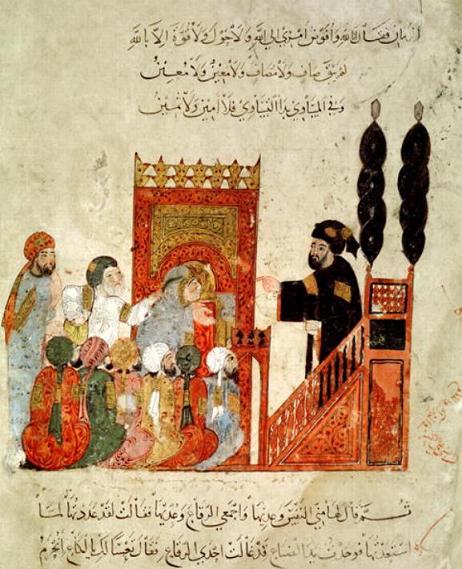
Word of God & Work of God:

The development and advancement in the humanly ‘Acquired Knowledge’ of metaphysics through Philosophy is called ‘Ilmul Kalam’ while the last Revealed Knowledge is available in the form of Qur’an called ‘Ilmul Qur’an’.  The Qur’an is the ‘Word of God’ while this world is the ‘Work of God’. An effort is made to reconcile these two with the Acquired Knowledge. The Revelations (Wahi), primary source of knowledge has ceased at its zenith in the form of Qur’an, but Philosophy (Ilmul Kalam) continues its slow journey of forward movement which should guide the humanity with in the bounds of the eternal guidance provided in Qur’an. It is a very sensitive issue because ‘The Unlimited’ can not be ‘fully conceived or comprehended’ by the human intellect through Acquired Knowledge only,  which is limited, so the Qur’an should be followed as Commands of God made easily comprehensible in the light of the Sunnah of last Prophet (peace be upon him). Allah says: “Will they not ponder upon the Qur'an? Are there locks upon their hearts?(Qur’an;47:24). “This Book (Al-Qur'an) which We have sent down to you (O Muhammad) is highly blessed, so that they may ponder upon its verses and the men of understanding may learn a lesson from it”.(Qur’an;38:39).
However It is evident that for success in this and hereafter, the Muslims should seek to excel in ‘Acquired Knowledge’ with inspiration from the primary source combined with the known knowledge of Qur’an and Sunnah will facilitate as ‘The Men of Understanding’ to ‘Ponder’ Qur’an fulfilling the command of God. It is through this process that the Tawhid (monotheism) is infused in learning that help in batter understanding.  Some of the mysteries of nature resolved by scientists recently like, the creation of the universe by ‘The Big Bang’(Qur’an;21:30, 41:11), creation of all life from water (Qur’an;21:30, 25:54) and many more are found to be mentioned in Qur’an fourteen centers ago.  

The Traditions (Hadith) of Prophet (PBUH):

The Traditions (Hadith) of Prophet (peace be upon him) are full of references to the significance of knowledge. Such sayings of the Prophet as; "Seek knowledge even in China", "Seek knowledge from the cradle to the grave", and "Verily the men of knowledge are the inheritors of the prophets", “Striving after knowledge is a sacred duty (faridah) for every man and woman who has surrendered himself or herself to God”(Ibn Majah); are well known to Muslims urging them to seek all types of useful knowledge (not restricted to religious sciences only) from whatever sources it might be found.  Apostle of Allah (peace be upon him) is reported to have said: “If anyone travels on a road in search of knowledge, Allah will cause him to travel on one of the roads of Paradise. The angels will lower their wings in their great pleasure with one who seeks knowledge, the inhabitants of the heavens and the Earth and the fish in the deep waters will ask forgiveness for the learned man. The superiority of the learned man over the devout is like that of the moon, on the night when it is full, over the rest of the stars. The learned are the heirs of the Prophets, and the Prophets leave neither Dinar nor Dirham, leaving only knowledge, and he who takes it takes an abundant portion.”(Sunan of Abu Dawood, Hadith:1631).
y Abu Hurayrah: Allah's Messenger (peace be upon him) said: “The knowledge from which no benefit is derived is like a treasure out of which nothing is spent in the cause of Allah.”(Al-Tirmidhi Hadith.280). Narrated by Abu Hurayrah: Allah's Messenger (peace be upon him) said: “When a man dies, his acts come to an end, but three (acts), recurring charity, or knowledge (by which people) benefit, or a pious son, who prays for him (for the deceased)”. (Sahih Muslim Hadith. 766).

Role of Experts in Technical Knowledge:

Prophet Muhammad (peace be upon him), basically conveyed guidance of Allah to the mankind. As far as knowledge of this world, the opinions of expert in particular field be made use of: Narrated by Anas ibn Malik & Aisha; Allah's Messenger (peace be upon him) happened to pass by the people who had been busy in grafting the trees. Thereupon he said: If you were not to do it, it might be good for you. (So they abandoned this practice) and there was a decline in the yield. He (the Prophet) happened to pass by them (and said): What has gone wrong with your trees? They said: You said so and so. Thereupon he said: You have better knowledge in the affairs of the world. (Sahih Muslim Hadith.1101).

Significance of Acquisition of Knowledge:

Narrated by Anas ibn Malik: The Prophet (peace be upon him) said: He who issues forth in search of knowledge is busy in the cause of Allah till he returns from his quest.  (Al Tirmidhi Hadith.420). Abu Hurayrah Narrated with reference to Allah's Apostle (peace be upon him) as saying: “--He who treads the path in search of knowledge, Allah will make that path easy, leading to Paradise for him and those persons who assemble in one of the houses of Allah (mosques), recite the Book of Allah and learn and teach the Qur'an (among themselves)…”(Sahih Muslim Hadith.1245). The importance of education is evident from the historical fact that, the pagan prisoners of war, captured by Muslims in the battle of Badr were asked to teach the illiterate Muslims to earn their freedom. Obviously the pagans were not to teach religious knowledge! Most of the companions also possessed a high standard of knowledge and wisdom, narrated by Ali ibn Abu Talib: Allah's Messenger (peace be upon him) said, "I am the house of wisdom and Ali is its door."(Al-Tirmidhi Hadith, 6087). “Yahya related to me from Malik that he heard that Luqman al-Hakim made his will and counseled his son, saying, "My son! Sit with the learned men and keep close to them. Allah gives life to the hearts with the light of wisdom as Allah gives life to the dead earth with the abundant rain of the sky."(Al-Muwatta Hadith 59.1). Like men, women are equally required to excel in the pursuit of education and knowledge.
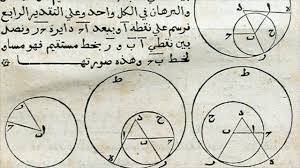
Theological & Scientific Knowledge linked:
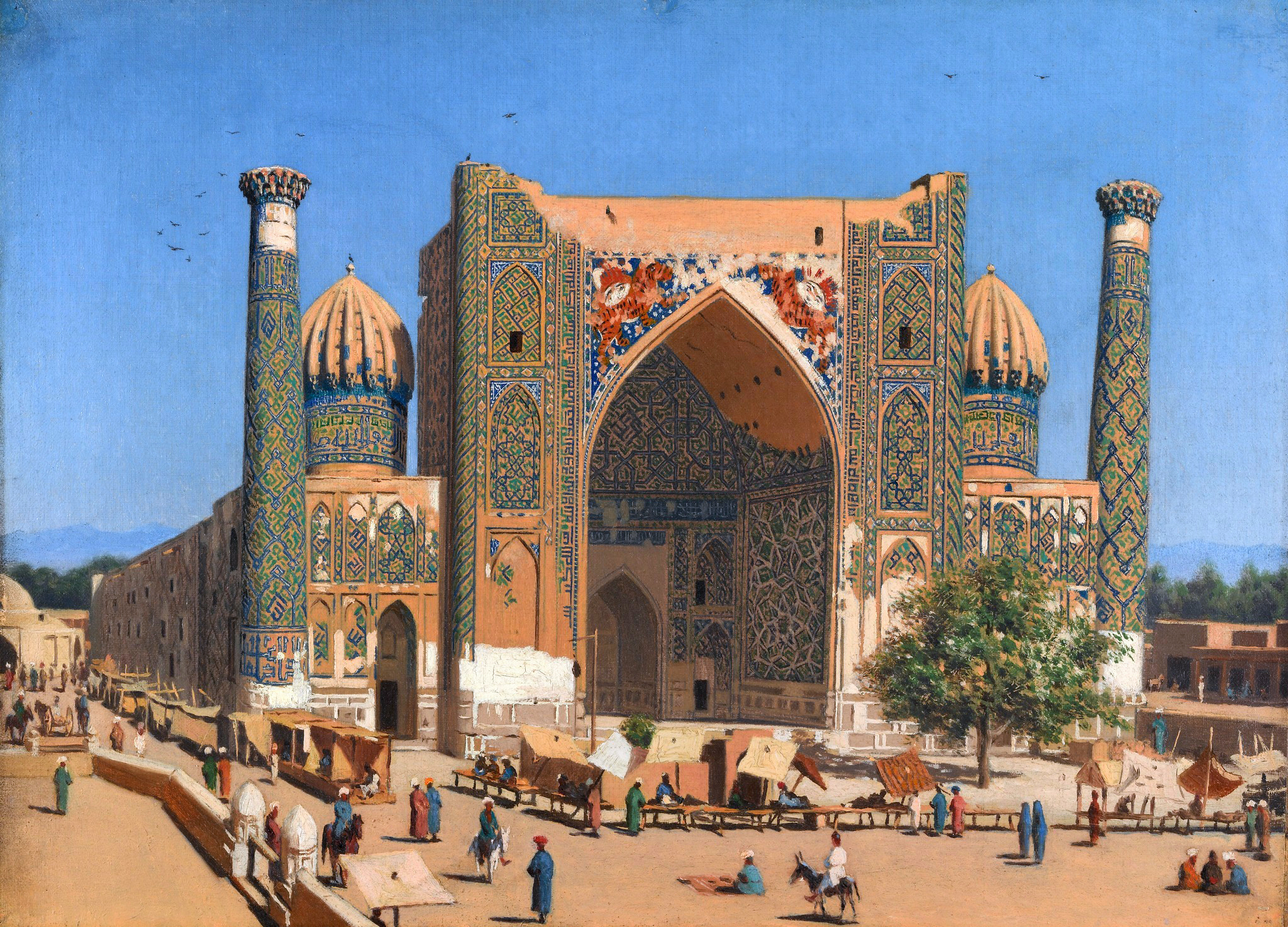
The knowledge of din is essential for attaining deep faith, its importance is evident from the fact that while proceeding to war when every head counts, Allah says: “It is not proper that all the believers take the filed (in time of war). From every group with in their midst some should refrain form going for the war, so that they may obtain the understanding of deeper knowledge of the Faith (Al-Islam), and teach their brethren when they return to them so that they may guard themselves (against evil)”.(Qur’an;9:122). However the pursuit of other branches of knowledge is not only necessary for good living but also adds to the attainment of faith and batter understanding of the message of Islam. Qur’an does not draw any dividing line between the spiritual and the worldly concerns of life but, rather, regards them as different aspects of one and the same reality. In many of its  verses, the Qur’an calls upon the believer to observe all nature and to discern God’s creative activity (Qura’n;10:5, 2:164, 30:46, 40:57, 50:7 & many more) in its manifold phenomena and ‘laws’ , as well as to mediate upon the lessons of history (Qura’n;22:46,27:69,29:20, 30:9) with a view to gaining a deeper insight  into man’s motivations and the innermost sprigs of his behaviour; and thus, the Qur’an itself is characterized as addressed to ‘those who think’ (Qura’n;47:24, 38:29).
In short, intellectual activity as such is postulated as a valid way to batter understanding of God’s will and - if perused with moral consciousness- as a valid method of worshiping God. This Qur’anic principle has been emphasized in many authentic sayings of Prophet mentioned at:  Abu Dawood, Hadith:1631, Sahih Muslim Hadith. 766, Al Tirmidhi Hadith.420 and Sahih Muslim Hadith.1245.  Consequently, the obligation of the believers to devote themselves to acquiring a deeper knowledge of the Faith and to impart its results to their fellow-believer relates to every branch of knowledge as well as to its practical application.

INDEX: