Featured post

Index

View my Flipboard Magazine. Read books Online here, or Download  as <PDF> or   < Word > UNIVERSE SCIENCE, GOD : ...

Showing posts with label Abraham. Show all posts

Front Page


Why it is important to rationally believe in Just One God?


The idea of a Supreme Power who is the First Cause of all things, the Creator and Ruler of heaven and earth has always been part of human nature from the beginning. He was not represented by images and had no temple or priests in His service. He was too exalted for an inadequate human cult. Hence there had been a primitive monotheism before people had started to worship a number of deities. Generally He faded from the consciousness of his people who formed images of many deities, His assistants, thus began the paganism. The name given to this divine Supreme Creator and Sustainer in English is GOD. Allah in Arabic, Yahweh in Hebrew. The belief of a Supreme deity who created the world and governs.  The belief on God was followed by His worship in different cultures. The relation of a group of human beings to God or the gods or, merely supernatural is known as religion. 

He sent messengers with revelations for guidance of people, to believe and worship just One God. The revelations, some recorded in the form of books were corrupted with the passage of time, which can easily be discovered with some effort. Aim was to keep the believe in one God alive in the human nature. Even if some one is not aware of any revealed book or message,  (people of interregnum) believe in one God is natural as   found among the primitive African & Australian tribes.

Hence if the final message of divine guidance (Quran) has not been delivered to someone, he is bound by nature and intellect to reach the conclusion about existence of one Supreme Creator, the God:
"We will show them Our signs in the universe and within their own beings until it will become manifest to them that it is the truth. Is it not enough about your Lord that He is witness to everything?" (Quran;41:53)
One has to make sincere effort and seek for help from God for guidance to the true path, here is a prayer:
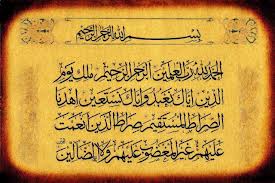
"In the name of God, the Most Gracious, the Most Merciful. All praise is due to God, the Lord of the Universe; the Beneficent, the Merciful; Lord of the Day of Judgement. You alone we serve, and to You alone we turn for help. Guide us to the straight path: the path of those You have blessed; not of those who have incurred Your wrath, nor of those who have gone astray." (Quran:1:1-7)


During the search for truth, If the believer in just one God, avoids evils and performs good deeds according to universally accepted moral codes and ethics, such a person can hope to ultimately achieve salvation (Also see, Quran;30:30, 28:59, 16:36, 22:17, 5:66, 22:67-69, 13:7, 91:7-10).

"Surely, God does not forgive that a partner is ascribed to Him, and He forgives anything short of that for whomsoever He wills. Whoever ascribes a partner to God commits a terrible sin".(Qur'an;4:48, 116)*
"SAY: He is the God; the One and Only. God the Eternal, the Uncaused Cause of All Being. "He begets not, and neither is He begotten; "and there is nothing that could be compared with Him". (Quran;112:1-4). 
"I ALONE AM GOD! I AM GOD and there is NONE LIKE ME"(Isaiah 46:9) 
"Be tolerant; enjoin what is right; and avoid the ignorant".(Quran;7:199) 
"As for those who are bent on denying the truth and on barring [others] from the path of God - all their [good] deeds will He let go to waste; whereas those who have attained to faith and do righteous deeds, and have come to believe in what has been bestowed from on high on Muhammad - for it is the truth from their Sustainer - [shall attain to God’s grace:] He will efface their [past] bad deeds, and will set their hearts at rest." (47:1-2)
"The same religion has He established for you as that which He enjoined on Noah - the which We have sent by inspiration to thee - and that which We enjoined on Abraham, Moses, and Jesus: Namely, that ye should remain steadfast in religion, and make no divisions therein: to those who worship other things than Allah, hard is the (way) to which thou callest them. Allah chooses to Himself those whom He pleases, and guides to Himself those who turn (to Him). (42:13)
"Those who believe (in the Qur'an), and those who follow the Jewish (scriptures), and the Christians and the Sabians,- any who believe in Allah and the Last Day, and work righteousness, shall have their reward with their Lord; on them shall be no fear, nor shall they grieve. (2:62,5:69)
"To every People have We appointed rites and ceremonies which they must follow: let them not then dispute with thee on the matter, but do thou invite (them) to thy Lord: for thou art assuredly on the Right Way. (22:67)

Every one is urged to ponder and rationally believe in Just One God, the pure Monotheism, and the final guidance provided by Him. The books,   articles, videos, magazines and other material by "Peace Forum NetWork", managed by Aftab Khan may lead towards the same goal.  
~~~~~~~~~~~~~~~~~~~~~~~~~~~~~~~~~~~~~~
* The purpose of verse (4:48) is not to tell man that he may commit any sin as long as he does not associate others with God in His divinity. The object is rather to impress upon those who had begun to regard polytheism as a trivial matter that it constitutes the most serious offence in God's sight, an offence so serious that while other sins may be pardoned this will not. (Also see 30:30, 28:59, 16:36, 22:17, 5:66, 22:67-69, 13:7, 91:7-10)
Polytheism, Shirk, Idolatry: The word širk comes from the Arabic root Š-R-K (ش ر ك), with the general meaning of "to share". In the context of the Quran, the particular sense of "sharing as an equal partner" is usually understood, so that polytheism means "attributing a partner to Allah".
"God is the Sovereign in the Universe. Whoever ascribes partners to God, or divinity to any of His creation, has indeed invented a tremendous sin. Allah will forgive any transgression but polytheism (SHIRK). Included in this category are those who worship their own desire (45:23), those who indulge in human worship and in sectarianism (30:31), (42:21), and those who follow man-made books in lieu of the Book of Allah (6:122), (6:137), and those who claim or believe in Revelation after the Qur'an, in any form, including claims of attaining Divine knowledge through mystical experience (6:62), (7:173), (7:191). And those who uphold Trinity (4:171), (5:72-73.) And those who claim that God has a son, and those who follow their religious leaders. "They take their rabbis, priests and monks to be their Lords* besides Allah. And they take as their Lord, the Messiah son of Mary. Yet they were commanded to worship but One God. There is no god but He. Praise and Glory to Him, He is far too Glorious for what they ascribe to Him. (*Talmud shows the Jewish superstition of ascribing divinity to Ezra, rabbis, saints, doctors of law and learned men. And the doctrine of Papal infallibility, divinity of saints and praying to them are common in the Roman Catholic Church).(Quran;9:31) Such people fall from the high station of humanity. Worshiping any entity other than Allah, sinks the human "Self" down to subhuman levels (22:31). But most of those who claim belief (and call themselves Muslims), indulge in SHIRK (12:106).[Translation by Dr.Shabbir Ahmed]. 
"So set thy face to the religion, a man of pure faith -- God's original upon which He originated mankind. There is no changing God's creation. That is the right religion; but most men know it not (Quran;30:30)
Read more >>> 
~~~~~~~~

Don't Discard Quran:

Quran is the Only Last, Complete, Protected Divine Book of Guidance, without any doubt, all other books are human efforts, cannot claim to be complete, free from error and doubt, yet Muslims have discarded Quran: "The Messenger will say, Lord, my people did indeed discard the Quran" (Quran 25:30)
  قرآن کو نظر انداز مت کریں
قرآن ہدایت کی واحد، آخری ، مکمل ، محفوظ کتاب اللہ ہے ، بلاشک و شبہ جبکہ باقی تمام کتابیں انسانی تحریریں، جو مکمل ہونے، غلطی، شک و شبہ سے مبرا ہونے کا دعوی نہیں کر سکتیں. مگر پھر بھی مسلمان قرآن کو نظر انداز کرتے ہیں: 
"اور رسول کہے گا کہ اے میرے رب ! بیشک میری امت نے اس قرآن کو چھوڑ رکھا تھا" ( الفرقان 25  آیت: 30)
  قرآن کو نظر انداز مت کریں .....[.......]

The Qur’an the well preserved, last book for guidance of humanity, contains more than six thousand verses encompassing hundreds of topics. To properly comprehend and to ponder over a subject, one has to fully understand it. To facilitate the reader in understanding the Quran and to spread it, Quran Subjects – Web Network” has been launched, comprising Blogsites, FB Page, Twitter and Flipboard Magazine, here are the links. ... [keep reading.....]


قرآن مضامین :
قرآن مجید واحد کتاب ہے جو پوری انسانیت کے لیےقیامت تک رہنمائی اور ہدایت کا ذریعہ ہے،اللہ تعالیٰ نے اس کتابِ ہدایت میں انسان کو پیش آنے والے مسائل کے حل کو تفصیل سے بیان کردیا ہے. موجودہ دور میں ہرشخص دنیاوی آسائشات عوام کےحصول میں مگن ہے، قرآن کو تلاوت کرتے ہیں اور ہر ایک لفظ پرثواب حاصل کرتے ہیں ، کچھ لوگ ترجمہ بھی پڑھتے ہیں ، مزید گہرائی میں جانے کے لیے مفسرین نے تفاسیر لکھیں ہیں، مگر دنیوی مصرفیات کی وجہ سے اکثر قرآن پر تدبر و فکر سے محروم رہتے ہیں ، "قرآن مضامین QURAN SUBJECTS" " اسی طرف کوشش ہے...پڑھتے جائیں  .....[...........] 


5.Quran Subjects Mag: https://flip.it/aJQcrm


 “SalaamOne", a nonprofit e-Forum to promote Peace through developing understanding of  Humanity, Religion, Culture &, Science for Peace.  The enterprise is managed by Aftab Khan, a freelance researcher and writer. His work and collection is available in the form of e-Books. articles, magazines, videos, posts at social media, blogs & video channels. SalaamOne is open to  all the rational, peace loving  people of any faith, gender or race. You may join at social media , invite your friends and share the stuff. The NetWork It has been visited by over Two Million people around the world, choose any topic of your interest:-

Chapter-3: Abraham (pbuh) & Decendents


Prophet Abraham (Ibrahim, peace be upon him) is estimated to have lived in early 2nd Millennia B.C (around 1800 BC) at Ur (Mesopotamia) Iraq. He is the common ancestor and spiritual leader of Muslims, Christians and Jews alike, also revered by people of other faiths. He discovered the existence of One God through his intellect, thought process and with grace of God. Allah says: “So also did We show Abraham the power and the laws of the heavens and the earth that he might (with understanding) have certitude. When the night covered him over he (Abraham) saw a star: he said: "this is my Lord!"  But when it set he said: "I love not those that set." When he saw the moon rising in splendor He said: "This is my Lord!" but when the moon set he said: "Unless my Lord guide me I shall surely be among those who go astray." When he saw the sun rising in splendor he said: "This is my Lord! this is the greatest (of all)."  But when the sun set he said: "O my people! I am (now) free from your (guilt) of giving partners to Allah. "For me I have set my face firmly and truly toward Him Who created the heavens and the earth, and never shall I give partners to Allah."(Qur’an;6:75-79);“And he believed the LORD; and he reckoned it to him as righteousness.”(Genesis:15:6). Once he was appointed the Messenger of Allah, he was blessed with special favours. Prophet Abraham (peace be upon him) invited the people to Islam (submission to one God):" When his people started arguing with him, he told them: "Will you argue with me about Allah, whereas He Himself has guided me? I do not fear those whom you take for gods besides Him, none can harm me unless my Lord so wills, the knowledge of my Lord encompasses everything, why don't you get admonition?(Qur’an;6:80). Allah says: "It is those who believe and confuse not their beliefs with wrong that are (truly) in security for they are on (right) guidance. That was the reasoning about Us which We gave to Abraham (to use) against his people: We raise whom We will degree after degree: for thy Lord is full of wisdom and knowledge.”(Qur’an;6:82-83).
Prophet Abraham (peace be upon him) was successful in the trial, he was childless, he was granted sons at old age, Ishmael, from his second wife Hager, and later Isaac (Ishaq) from his first wife Sara. According to an Islamic tradition he left Ishmael at Makka while he was older enough. The other tradition narrates that he had to leave the infant Isma’il and his mother at a far off place in desert (Makka). They miraculously survived due to water of spring (Zamzam). Abraham's faith was so great that later he went to obey God's com­mand to sacrifice his only son (Ishmael), however at the last minute; God permitted him to substitute a ram. Muslim tradition identifies the son to be sacrificed as Ishmael (Biblical traditions claim, Isaac). Prophet Abraham (peace be upon him) again came to Makka to rebuilt the first house of Allah, Ka’ba with Isma’il as a sign of God's covenant with them and established the rituals of pilgrimage (Hajj). Allah says: “And when Abraham and Ishmael were raising the foundations of the House, (Abraham prayed): Our Lord! Accept from us (this duty). Lo! Thou, only Thou, art the Hearer, the Knower.”(Qur’an;2:127).
A controversy has raged between the followers of the Bible and the adherents of Islam as to which of the sons of Abraham, Ishmael or Isaac was offered as a sacrifice. It is important to note that, a peculiar sanctity was attached to the first-born both of man and of cattle among people right since the time of Adam, it was especially of great importance among the Israelites. God claimed that the first-born males of man and of animals should be consecrated to him, the one as a priest (Exodus;19:22,24), representing the family to which he belonged, and the other to be offered up in sacrifice (Geneis;4:4). The laws concerning this redemption of the first-born of man are recorded in Exodus;13:12-15; 22:29; 34:20; Numbers;3:45; 8:17; 18:16 and Leviticus;12:2,4. Even the first-fruits of the ground were offered unto God just as the first-born of man and animals. Ishmael, without any doubt was first born son of Prophet Abraham  (peace be upon him). The Bible is quite clear in designating the offering: “He said, "Take your son, your only son Isaac, whom you love, and go to the land of Mori'ah, and offer him there as a burnt offering upon one of the mountains of which I shall tell you."(Genesis;22:2). If at anytime, an offspring of Prophet Abraham  (peace be upon him) can be described as "thine only son: it could only be Ishmael, because for more than thirteen years, he was the only son and seed of Abraham. God Almighty acknowledges Ishmael as the "son and seed" of Abraham in no less than twelve places in the Book of Genesis alone. At no time was Isaac the only son and seed of Abraham. The false pen of the scribe was in the hand of the Hebrews who edited the Books of Moses, as the prophet Jeremiah lament: “How do ye say, We are wise, and the law (the Torah) of the Lord is with us? Lo, certainly in vain made he it; the pen of the scribe is in vain.”(Jeremiah;8:8). When the Hebrews are found to convert an Israelite into an Ishmaelite when no motives are involved, then how much easier for them to change the word "you only son Ishmael" to : your only son Isaac!"
Covenant and Iniquitous Decedents: Prophet Abraham (peace be upon him) is the original monotheist in the known history, purifier of God's house, builder of the Ka’ba, and a Muslim (having surrendered to the will of God), who preached against idolatry and sin. The scripture of revelations to Abraham is mentioned in Qur’an;53:36-37 & 87:18-19, which is now extinct, though ‘Testament of Abraham’ had been popular among Christians. He destroyed the idols and survived attempt by the king to burn him alive. After successful trials he was rewarded by God for his faith and given a position of spiritual lead­ership of the mankind, to be passed down to his descendants, excluding the wrong doers (Qur’an;2:124). Allah says: “Do they, perchance, envy other people for what God has granted them out of His bounty? But then, We did grant revelation and wisdom unto the House of Abraham (aal Ibraahem- Descendants), and We did bestow on them a mighty dominion:”(Qur’an;4:54). The descendants obviously include the progeny of Ishmael and Isaac (peace be upon them). The claim of the children of Israel as “Chosen People of God” by virtue of their decent from Abraham, who was made “a leader of mankind” by God, was totally negated. God makes it clear that the exalted status of Prophet Abraham (peace be upon him) was not something that would automatically confer a comparable status on this physical descendants, and definitely not on the sinners among them. God also took solemn pledge from the Children of Israel and those call themselves as Christians, but they broke it. Allah says: ““Remember Allah's favor to you and the covenant by which He bound you to Himself when you said: "We hear and we obey." Have fear of God; surely God knows the secrets of your hearts.”(Qur’an;5:7); “God accepted a covenant from the Children of Israel and appointed twelve chieftains from among them and said: "I am with you; if you establish Prayers (Salah) pay Alms (Zakah), believe in My Messengers, support them and give a generous loan to Allah (spend in charity), I will wipe out from you your evils and admit you to gardens with rivers flowing beneath; However, if any one of you, after this, violates this covenant, he will indeed go astray from the Right Way. Even after that, they broke their covenant; as a result, We laid on them Our curse and hardened their hearts. They tempered with words out of their context and neglected much of what they were enjoined. You will always find most of them deceitful except for a few of them. Yet forgive them and overlook their misdeeds. Allah loves those who are kind to others.”(Qur’an;5:12-13). Prophet Abraham (peace be upon him) settled at Palestine, he died at very old age and was buried in Hebron, near Jerusalem.
Prophet Abraham (peace be upon him) was the true faithful, Allah says: “And who, unless he be weak of mind, would want to abandon Abraham's creed, seeing that We have indeed raised him high in this world, and that, verily, in the life to come he shall be among the righteous? When his Sustainer said to him, "Surrender thyself unto Me!"-he answered, "I have surrendered myself unto [Thee,] the Sustainer of all the worlds." And this very thing did Abraham bequeath unto his children, and [so did] Jacob: when he said: "O my sons! Allah has chosen for you this way of life (Deen), therefore, die not unless you have surrendered yourself un to Him. “Nay, but you [yourselves, O children of Israel,] bear witness that when death was approaching Jacob, he said unto his sons: "Whom will you worship after I am gone?" They answered: "We will worship thy God, the God of thy forefathers Abraham and Ishmael and Isaac, the One God; and unto Him w1ll we surrender ourselves.”(Qur’an;2:130-133).
The Biblical Account:
The narrative of Prophet Abraham (peace be upon him) is given in the book of Genesis, chapter 12 to 36. The childless septuagenarian receives promises. He gets a son, Ishmael, by Hagar, given to him as his wife by his wife Sara: “And Sarai, Abram’s wife, took Hagar the Egyptian, her handmaid, after Abram had dwelt ten years in the land of Canaan, and gave her to Abram her husband to be his wife.”(Genesis:16:3). Out of jealously Sara forces her to leave with young son Ishmael in to wilderness, where angel appears to tell her: “Arise, lift up the lad (Ishmael), and hold him in thy hand. For I will make him a great nation.”(Genesis:21:18). (According to a Muslim traditions, infant Ishmael along with his mother Hagar was left in the wilderness at Makka, an uninhabited place at that time, who subsequently become the ancestor of Arabs. Muhammad, peace be upon him, the last Prophet, belongs to the progeny of Ishmael.) 
Prophet Abraham (peace be upon him) is awarded with a covenant from God that his "seed" will inherit the land and become a numerous nation: “And I will establish my covenant between me and you and your descendants after you throughout their generations for an everlasting covenant, to be God to you and to your descendants after you.  And I will give to you, and to your descendants after you, the land of your sojourning, all the land of Canaan, for an everlasting possession; and I will be their God." And God said to Abraham, "As for you, you shall keep my covenant, you and your descendants after you throughout their generations. This is my covenant, which you shall keep, between me and you and your descendants after you: Every male among you shall be circumcised.”(Genesis;17:7-10); “And God said, Nay, but Sarah thy wife shall bear thee a son; and thou shalt call his name Isaac: and I will establish my covenant with him for an everlasting covenant for his seed after him. And as for Ishmael, I have heard thee: behold, I have blessed him, and will make him fruitful, and will multiply him exceedingly; twelve princes shall he beget, and I will make him a great nation. But my covenant will I establish with Isaac, whom Sarah shall bear unto thee at this set time in the next year. And he left off talking with him, and God went up from Abraham. (Genesis;17:19-22).
At the age of 100 years, Prophet Abraham (peace be upon him) gets a son Isaac, by Sarah, who is to be the heir of the promise. Yet Abraham is ready to obey God's command to sacrifice Isaac, a test of his faith, which he is not required to consummate in the end because God substitutes a ram. [Muslim traditions and internal evidence from Bible about age of child and timings support that it was Ishmael not Isaac]. At Sarah's death, he purchases the cave of Machpelah near Hebron, together with the adjoining ground, as a family burying place. Prophet Abraham (peace be upon him) dies at the age of 175 and buried in the cave of Machpelah (Genesis;25:9). This place is venerated today in Hebron, at the Haram al-Khalil (Holy Place of the Friend), under the mosque. Abraham is pictured in Bible with various characteristics: a righteous man, with wholehearted commitment to God; a man of peace (in settling a boundary dispute with his nephew Lot), compassionate (he argues and bargains with God to spare the people of Sodom and Gomorrah), and hospitable (he welcomes three visiting angels); a quick-acting warrior as he rescued Lot and his family from a raiding party, however on his return from this expedition, Abraham is honored by Melchizedek, a personality with unique characteristics, portrayed by Bible, even superior to Adam and Prophet Jesus (peace be upon him): “For this Melchizedek, king of Salem, priest of the Most High God, met Abraham returning from the slaughter of the kings and blessed him; and to him Abraham apportioned a tenth part of everything. He is first, by translation of his name, king of righteousness, and then he is also king of Salem, that is, king of peace. He is without father or mother or genealogy, and has neither beginning of days nor end of life, but resembling the Son of God he continues a priest for ever. See how great he is! Abraham the patriarch gave him a tithe of the spoils.”(Hebrews;7:1-4); “And Melchizedek king of Salem brought out bread and wine; he was priest of God Most High. And he blessed him and said, "Blessed be Abram by God Most High, maker of heaven and earth; and blessed be God Most High, who has delivered your enemies into your hand!”(Genesis;14:18-20). “The LORD hath sworn, and will not repent, Thou art a priest for ever after the order of Melchizedek.”(Psalms;110:4). Prophet Abraham (peace be upon him) is also depicted as giving wrong statement to save his own skin: “And Abraham said of Sarah his wife, She is my sister. And Abimelech king of Gerar sent, and took Sarah.”(Geneses;20:2). The incidence of Abraham  passing off Sarah as his sister and letting her be picked by the Egyptian pharaoh for his harem, but she miraculously returns unmolested due to her piety and prayers accepted by God, with Hagar given as gift, has also been Narrated by Abu Hurairah in Sahih Al Bukhari Hadith 3.420 & 4.578. Overall Abraham appears as both a man of great spiritual depth and strength and a person with common human weaknesses and needs.

Prophet Ishmael (peace be upon him):

According to Islamic traditions, Prophet Ishmael (peace be upon him), the first born son of Prophet Abraham (peace be upon him) was left in wilderness (now known as Makka), as an infant along with his mother Hagar. Abraham invoked Almighty Allah: “0 our Lord! I have made some of my offspring to dwell in a valley with no cultivation, by Your Sacred House (the Ka’ba at Mecca); in order, 0 our Lord, that they may offer prayers perfectly , so fill some hearts among men with love towards them, and (0 Allah) provide them with fruits so that they may give thanks. 0’ our Lord! Certainly, You know what we conceal and what we reveal. Nothing on the earth or in the heaven is hidden from Allah.”(Qur’an;14:37-38). The biblical narrative is some what different, but it mentions: “And Hagar bare Abram a son: and Abram called his son's name, which Hagar bare, Ishmael. And Abram was eighty-six years old, when Hagar bare Ishmael to Abram.”(Genesis;16:15-16), “And the angel of the LORD said unto her (Hager), I will multiply thy seed exceedingly, that it shall not be numbered for multitude. And the angel of the LORD said unto her, Behold, thou art with child, and shalt bear a son, and shalt call his name Ishmael; because the LORD hath heard thy affliction.”(Genesis;16:10-11). “And also of the son of the bondwoman will I make a nation, because he is thy seed.”(Genesis;13:18), “And as for Ishmael, I have heard thee: Behold, I have blessed him, and will make him fruitful, and will multiply him exceedingly; twelve princes shall he beget, and I will make him a great nation.” (Genesis;17:20), “And he will be a wild man; his hand will be against every man, and every man's hand against him; and he shall dwell in the presence of all his brethren.”(Genesis;16:12).
The whole land of Arabia appears (Genesis;10:1-32) to have been inhabited by a variety of tribes of different lineage, Ishmaelites, Arabians, Idumeans, Horites, and Edomites; but at length becoming amalgamated, they came to be known by the general designation of Arabs. The modern nation of Arabs is predominantly Ishmaelite (decedents of Ishmael or Isma’il), their language Arabic, is the most developed and the richest of all the Semitic languages, and is of great value to the student of Hebrew. Isma’il was also a messenger of God (Qur’an;19:54). He willingly offered himself to be sacrificed in obedience to the command of Allah to his father Prophet Abraham (peace be upon him), who was asked to offer the sacrifice of his ‘only son’ as mentioned at Genesis;22:2. Isaac was 13 years younger to Ishmael, hence he can not be called as  only son of Abraham. Allah accepted the gesture of Abraham and substituted ram instead (Qur’an;37:102-107). Ishmael helped his father Abraham in building the Ka’ba (Qur’an;2:127). He called the people around (Arabia) to prayer and charity. Isma’il became the ancestor of Arabs. Allah says: “We blessed him (Abraham) and Isaac: but of their progeny are (some) that do right, and (some) that obviously do wrong, to their own souls.”(Qur’an;37:1130). Once the progeny of Abraham through his second son Isaac deviated from the faith of Abraham, after two and half millennium, God shifted the honor of “Leadership of Mankind” to the decedents of Ishmael by appointing Muhammad (peace be upon him) as His last messenger (610 C.E).

Prophet Isaac (peace be upon him):

Prophet Isaac (Ishaq, peace be upon him) the second son of Prophet Abraham (peace be upon him) was born from his first wife Sarah at the old age, as special blessings from God. He was father of Esau and Prophet Jacob (Yaqub, peace be upon him), who is also known as Israel. Twelve Hebrew tribes, descended from the twelve sons of  Prophet Jacob (peace be upon him), and they  became to be known as the Israelites. Prophet Jacob had settled at Hebron (Palestine) where his father Prophet Isaac and before him Prophet Abraham lived. For almost next fifteen hundred years God kept on sending messengers in the progeny of Jacob (Israel), Jesus (peace be upon him)  being the last. As mentioned above the Biblical traditions attribute the offer of sacrifice of Isaac by Abraham, where as Islamic traditions ascribe it to Ishmael.

Prophet Jacob (peace be upon him):

Jacob (called Ya'aqov in Hebrew and Ya'qub in Arabic, also called Israel) was a great messenger of Allah, Hebrew patriarch who was the grandson of Prophet Abraham (peace be upon him), the son of Isaac and Rebekah. He is the traditional ancestor of the people of Israel. Allah says: “And we gave (Abraham) Isaac and Jacob, and ordained among his progeny Prophethood and Revelation, and We granted him his reward in this life; and he was in the Hereafter (of the company) of the Righteous.”(Qura’n;29:27). Stories about Jacob in the Bible commence at Genesis;25:19. Jacob was the younger twin brother of Esau, who was the ancestor of Edom and the Edomites. It is narrated in Bible that Jacob, by means of an elaborate double deception, managed to obtain his older brother's birthright from their father Isaac. Jacob then fled his brother's wrath, during journey Jacob received a special revelation from God; God promised Jacob lands and numerous offspring that would prove to be the blessing of the entire Earth. Jacob named the place where he received his vision Beth-el ("House of God"). Then is the story of his love with cousin Rachel and substitution of her elder sister Leah, for Rachel by their father Laban at the wedding ceremony. Thus he was compelled to serve Laban for another seven years to get his beloved Rachel as his wife. Jacob then set out with his wives and children to return to Palestine. On the way Jacob wrestled with a mysterious stranger, a divine being, who changed Jacob's name to Israel, Bible narrates: “And Jacob was left alone; and there wrestled a man with him until the breaking of the day. And when he saw that he prevailed not against him, he touched the hollow of his thigh; and the hollow of Jacob’s thigh was strained, as he wrestled with him. And he said, Let me go, for the day breaketh. And he said, I will not let thee go, except thou bless me. And he said unto him, What is thy name? And he said, Jacob. And he said, Thy name shall be called no more Jacob, but Israel: for thou hast striven with God and with men, and hast prevailed. And Jacob asked him, and said, Tell me, I pray thee, thy name. And he said, wherefore is it that thou dost ask after my name? And he blessed him there. And Jacob called the name of the place Peniel: for, said he, I have seen God face to face, and my life is preserved.”(Genesis;32:24-30) [Jacob wrestling with God and prevailing, is inconceivable!]
The story continues in Bible, Jacob then met his brother Esau, reconciled and settled in Canaan. Jacob had 13 children, 10 of whom were founders of tribes of Israel. Leah bore him his only daughter, Dinah, and six sons--Reuben, Simeon, Levi (who did not found a tribe, but was the ancestor of the Levites), Judah (from whom a tribe and the Davidic monarchy were descended), Issachar, and Zebulun. Leah's maidservant, Zilpah, bore him Gad and Asher, and Rachel's maidservant, Bilhah, bore him Dan and Naphtali. [The children born through maidservants of wives of Jacob are not dealt with contempt in line with the prevalent custom, where as in case of Ishmael, born from Hager, the prejudice and dichotomy of Israelites is too palpable.] Rachel's sons were Benjamin and Joseph (who did not found a tribe, but whose sons founded the tribes of Manasseh and Ephraim). The story of Jacob's later years more properly belongs to the story of Joseph, who became a virtual ruler of Egypt under the King. Late in his life, a famine prompted Jacob and his sons to migrate to Egypt, where he was reunited with his son Joseph, who had disappeared some years before, due to mischief of his jealous brothers. According to Bible, Jacob (Israel) died in Egypt at the age of 147 years and was buried in Canaan at Hebron. The stories about Jacob's birth and his acquisition of the birthright (Genesis 25:19-34; 27) provide a thinly veiled apology for the relation between Edom (Esau) and Israel in Davidic times. Edom, the older nation, was made subject to Israel by David (2 Samuel;8:8). The stories of Jacob assume and emphasize that all things occur by divine design. The divine objective is of overriding significance; it is God's will that Esau (Edom) shall live in the desert and be subject to Israel. Qur’an addresses his decedents as ‘Children of Israel’. Like Abraham, Jacob also advised his progeny to be obedient to God: “And this was the Legacy that Abraham left to his sons, and so did Jacob; "O my sons! God hath chosen the Faith for you; then die not except in the state of submission (to God).”(Qura’n;2:132).

Prophet Joseph (peace be upon him):

Prophet Joseph (Yusuf), peace be upon him, was the favorite son of Prophet Jacob (peace be upon him). In the early age Joseph was cast into slavery due to jealousy of his brothers. The Hebrews version of narrative of Joseph is given at in Bible (Genesis;Chapters:37-50). Qur’an mentions about his story at Chapter 12, named as ‘Yousaf’ (Joseph). According to Qur’an: “There is a lesson in these stories of former people for the men of understanding. This story of Joseph revealed in the Qur’an is not an invented tale, but a confirmation of previous scriptures - a detailed exposition of all things, and is a guidance and blessing for the people who believe.”(Qura’n;12:111).The Qur’anic story is similar to but not identical with the Biblical story however the atmosphere is widely different. The Biblical story is like a folk tale in which morality has no place. Its tendency is to exalt the clever and financially minded Hebrew against the Egyptians, and to explain certain ethnic and tribal peculiarities in later Israeli history. Joseph is shown as buying up all the cattle and the land of the poor Egyptians for the state under the stress of famine conditions, and making the Israelites “rulers” over Pharaoh’s cattle [Historically it is proved that they were Hyksos Kings, of Semites origin and not Egyptian Pharaohs: Qur’an rightly mentions them as king, and in case of Moses Pharaohs.] The Qur’anic story on the other hand is less a narrative than a highly spiritual sermon of allegory explaining the seeming contradictions in life, the enduring nature of virtues in a world full of flux and change, and the marvelous working of God’s eternal purposes in His Plan unfolded on the wide canvas of history.
Allah says: “Verily in Joseph and his brethren are Signs (or Symbols) for Seekers (after Truth).”(Qura’n;12:7), “When Joseph attained his full manhood, We gave him power and knowledge: thus do We reward those who do right.”(Qura’n;12:22). Joseph was a handsome man, the wife of his master, (Egyptian high official-Aziz) tried to seduce him but being a chosen servant of God, he remained steadfast, and did not give in to evil temptations. Despite his innocence he had to spend years in jail, till taken out honorably. Through God gifted ability of interpretation of dreams, prophesies, prophetic wisdom, honesty, chastity and good management abilities he became trusted ad­viser of Hyksos King of Egypt: “Thus did we give established power to Joseph in the land, to take possession therein as, when, or where he pleased. We bestow of Our mercy on whom We please, and We suffer not, to be lost, the reward of those who do good.”(Qura’n;12:56). He saved the people from starvation during the famine with good management. Joseph adhered to the faith of his ancestors and preached to his people as a prophet. He forgave his brothers and used his ac­quired position in Egypt to save them and his father from famine. He is quoted as an example of generosity, mercy, patience, chastity, compassion, and faith in God's control over events in life. Some Israelites settled in Egypt during this period. The Hyksos kings belonged to the Arab race, but had migrated from Palestine and Syria to Egypt in or about 2000 B.C. and taken possession of the country. Being aliens, they were not hostile to the Israelis. Prophet Jacob (peace be upon him) and his sons went down into Egypt (Genesis;45:17-25). This immigration took place probably about 350 years before period of Prophet Moses (peace be upon him) (may be, around 1650 B.C). The Israelis prospered until the Hyksos Kings were deposed in Egypt (1570 BC), thereafter once their influence in the court diminished, Israelites were persecuted as aliens and forced into slavery. It was Prophet Moses (peace be upon him), who delivered his people from Egyptian slavery in 13th Century B.C to be later reunited with other Hebrew tribes with whom they retained a sense of kinship.
INDEX:
Related:


Chapter-5: David (pbuh)

CHAPTER-5: PROPHET DAVID (PBUH) & THEREAFTER

Prophet David (Dawud, peace be upon him) succeeded King Saul after his death. He reigned for about forty years (1000 to 962 BC), he established a united kingdom over, all the Israel, with Jerusalem as its capital. The Jews and Christians consider him a king, despite clear indications of him being a king, messenger of God and Muslim [Muslim: who will do all My (God’s) will] in the Bible: “.. the LORD has sought out a man after his own heart; and the LORD has appointed him to be prince over his people ..(1Sameul;13:14);“..he raised up David to be their king; of whom he testified and said, `I have found in David the son of Jesse a man after my heart, who will do all my will.”(Acts;13:22);“Then Samuel took the horn of oil, and anointed him in the midst of his brethren: and the Spirit of the LORD came upon David from that day forward. So Samuel rose up, and went to Ramah.”(1Samuel;16:13). David communicated with God (2 Samuel;2:1) and God to him (1Chronicles;28:3). The last words of David were: “The Spirit of the LORD spoke by me, and his word was in my tongue.”(2Samuel;23:2).
According to the Islamic traditions he was a prophet (Qur’an;6:84,17:55) and a king, who was given scripture: “..unto David We gave the Psalms.”(Qur’an;17:55). God made him a vicegerent in the earth: “We said: "O’ Dawud! We have made you a vicegerent in the earth, so rule among the people with justice and do not follow your own desires lest they mislead you from the Way of Allah. As for those who go astray from the Way of Allah, they shall surely have a severe punishment because of forgetting the Day of Reckoning.”(Qur’an;38:26); “We strengthened his kingdom and gave him wisdom and sound judgment in speech and decision.”(Qur’an;38:20); Allah says: “And We verily gave knowledge unto David and Solomon, and they said: Praise be to Allah, Who hath preferred us above many of His believing slaves!”(Qur’an;27:15). Prophet David (peace be upon him), was a worthy and successful king, who, against great odds, founded the Judean dynasty and carved out an empire from the border of Egypt to the Euphrates River. He was the shepherd, warrior, king, wise man, prophet and poet.
He was tested, (details not mentioned) repented and forgiven by God, the incidence is allegorically narrated in Qur’an, Allah says: “Have you heard the story of the two litigants who made an entry into his private chamber through climbing over the wall? When They entered the presence of David, and He was terrified of them, They said: "Fear not: we are two disputants, one of whom has wronged the other: decide Now between us with truth, and treat us not with injustice, but guide us to the Even Path. "This man is My brother: He has Nine and ninety ewes, and I have (but) one: yet He says, 'commit Her to My care,' and is (moreover) harsh to me In speech."(David) said: "He has undoubtedly wronged Thee In demanding Thy (single) ewe to be added to His (flock of) ewes: truly many are the partners (in business) who wrong Each other: not so do those who believe and work deeds of righteousness, and How few are they?"...and David gathered that We had tried him: He asked forgiveness of His Lord, fell down, bowing (in prostration), and turned (to Allah In repentance).So we forgave Him This (lapse): He enjoyed, indeed, a near approach to us, and a beautiful place of (final) return.”(Qur’an;38:21-25).
Prophet David (peace be upon him) was Israel's first successful king. He united all of the Israelite tribes, became the effective ruler over all of them, and was the founder of an enduring dynasty. Thus, he succeeded where King Saul had failed and attained a unique place in Israel's history and tradition. He established the city of Jerusalem as the centre both of Israel's political power and of its worship. David as a youth killed the giant Goliath with three pebbles and a slingshot: “So they routed them by Allah's leave and David slew Goliath; and Allah gave him the kingdom and wisdom, and taught him of that which He wills. And if Allah had not repelled some men by others the earth would have been corrupted. But Allah is a Lord of Kindness to (His) creatures.”(Qur’an;2:251). Used as a par­adigm as his story shows the faith, determination, and God's blessing are more important than size and strength: “And assuredly We gave David grace from Us, (saying): O ye hills and birds, echo his psalms of praise! And We made the iron supple unto him”(Qur’an;34:10).
The Biblical account of the era of Prophet David (peace be upon him) is covered in the First and Second Book of Samuel. The Book of I Kings, chapter 1, to chapter 2, verse 11 cover the last years of David and Solomon's succession to the throne. The biblical account is distorted, tarnishing the image of David, as normally done by the Israelites with the messengers. A shameful story is ascribed to David whereby he commits adultery (2 Samuel;11:4) with Bathsheba, the wife of David's Hittite general, Uriah and then wickedly caused the death of her husband (2 Samuel;11:6-25). She bore Prophet and King Solomon. David is also accused of shamelessly dancing naked: “How glorious was the king of Israel (David) to day, who uncovered himself today in the eyes of the handmaids of his servants, as one of the vain fellows shamelessly uncovers himself”(2 Samuel;6:20).
In Israel's religious tradition the royal line, or ‘House of David’ became a primary symbol of the bond between God and the nation; the king was the mediator between the deity and his people. The English word messiah is derived from hameshiach ("the anointed one"), the title of the kings of the line of David. Thus, in later times of disaster, Israel began to wait for a messiah, a new mediator of the power of God that would redeem the people and its land. By designating Prophet Jesus (peace be upon him) as the son of David (peace be upon him), Christianity adhere to the conviction that this hope had been fulfilled. David lived in the memory of his people in a double way: as the great founder of their political power and as the symbol of a central facet of their religious faith. He was succeeded by his son Solomon who was also an obedient servant and prophet of God.

Prophet Solomon (peace be upon him): 

Prophet & Great King: Prophet Solomon (Suleiman, peace be upon him), was heir to his father Prophet David (peace be upon him) as prophet (Qur’an;6:84) and king, he had been endowed with the speech of birds (Qur’an;27:16). The biblical traditions project him as a king, who ruled the united kingdom of Israelites from 961 to 922 B.C. His name ‘Solomon’ is derived from Hebrew word; ‘Shalom’ means ‘peace’. Prophet Solomon (peace be upon him) was put on trial, then he turned to God in repentance, and prayed for forgiveness and grant of unique kingdom unmatched in history (Qur’an;38:34). Allah granted his wish. Allah says: “We bestowed knowledge (spiritual insight) on David and Solomon. They both said: "Praise be to Allah Who has exalted us above many of His believing servants."(Qur’an;27:15). He is also traditionally regarded as the greatest king of Israel, renowned for his wisdom, and builder of the First Temple in Jerusalem (Al-Aqsa Mosque, highly revered by Muslims as the 2nd holiest site after Ka’ba at Makka).
He maintained his dominions with military strength and established Israelite colonies outside his kingdom's borders. He in­herited both his father's kingdom and his spiritual insight and prophetic office.  Legend makes much of a romance between the Queen of Sheba and Solomon, for his granting her "all that she desired, whatever she asked"(1Kings;10:13) has been interpreted to include an offspring. No one in the history has been blessed with the Kingdom like his. God had given him command even over the special creatures like jinns, the animal world, winds and molten copper.(Qur’an;34:12-13). Palestine was destined to be an important centre because of its strategic location for trade by land and sea. Prophet Solomon (peace be upon him) fulfilled the commercial destiny of Palestine and brought it to its greatest heights. The nature of his empire was predominantly commercial; it served him and friendly rulers to increase trade by land and sea. The joint merchant-marine expeditions of Solomon and the Phoenician king Hiram of Tyre, sailed practically to the ends of the known world. The demand for fortresses and garrison cities throughout his homeland and empire made it necessary for Solomon to embark on a vast building program; the prosperity of the nation made such a program possible. He was especially lavish with his capital, Jerusalem, where he erected a city wall, a construction called the Millo, the royal palace, and the famous First Temple.
The construction of the First Temple was started during the reign of Prophet Solomon (peace be upon him), and completed in 957 BC. He also employed jinns in this construction. After building the House of Worship of God, as fulfillment of desire of his father David, Solomon said: “..I have built the house for the name of the LORD, the God of Israel”(1Kings;8:20), “Then Solomon stood before the altar of the LORD in the presence of all the assembly of Israel, and spread forth his hands toward heaven;” (1Kings;8:22), he prayed: "But will God indeed dwell on the earth? Behold, heaven and the highest heaven cannot contain thee; how much less this house which I have built! Yet have regard to the prayer of thy servant and to his supplication, O LORD my God, hearkening to the cry and to the prayer which thy servant prays before thee this day; that thy eyes may be open night and day toward this house, the place of which thou hast said, `My name shall be there,' that thou mayest hearken to the prayer which thy servant offers toward this place. And hearken thou to the supplication of thy servant and of thy people Israel, when they pray toward this place; yea, hear thou in heaven thy dwelling place; and when thou hearest, forgive.”(1Kings;8:27-30). Solomon's Temple which was to assume an importance far beyond what its dimensions might suggest, for its site became the only central shrine for Judaism, early Christianity and sacred to Islam being the first Qibla (prayer direction) and starting point for the mystic night journey (maira’j) of Prophet Muhammad (peace be upon him) to heavens.
Wisdom and Justice: Prophet Solomon (peace be upon him) also became famous as a sage. Allah says: “at that time We gave Suleiman insight to arrive at the right decision, although We had given wisdom and knowledge to both  of them (David and Solomon)...” (Qur’an;21:79). There are numerous traditions which highlight his sense of wisdom and justice. Solomon was deemed wiser than all the sages of Egypt and the Middle East even wiser than some ancient paragons of wisdom. Solomon was also famed as a poet who composed 1,005 songs. The Biblical ‘Song of Solomon’ is attributed to him: “The song of songs, which is Solomon's.”(Song of Solomon;1:1). Prophet Muhammad (peace be upon him) is mentioned by name in the Song of Solomon,: “His mouth is most sweet: yea, he is Muhammad-im (altogether lovely, im is added for respect in Hebrew). This is my beloved, and this is my friend, O daughters of Jerusalem."(Song of Solomon; 5:16). [In Hebrew:"Hikko Mamittakim we kullo Muhammad-im Zehdoodeh wa Zehraee Bayna Jerusalem."].
Distorted Biblical Account: The Bible narrate the reign of Prophet Solomon (peace be upon him) especially in 1 Kings 1-11 and 2 Chronicles 1-9. The biblical account of Prophet Solomon (peace be upon him) has inherent distortions, which tarnish the image of this great prophet and king, as normally done by the Israelites with their messengers. A shameful story is ascribed to Solomon whereby he is blamed to have committed idolatry by worshiping other gods. Consequently the dismemberment of the united monarchy was to be brought about by God: “For when Solomon was old his wives turned away his heart after other gods; and his heart was not wholly true to the LORD his God, as was the heart of David his father. For Solomon went after Ash'toreth the goddess of the Sido'nians, and after Milcom the abomination of the Ammonites. So Solomon did what was evil in the sight of the LORD, and did not wholly follow the LORD, as David his father had done."(1 Kings;11:4-7); And the LORD was angry with Solomon, because his heart had turned away from the LORD, the God of Israel, who had appeared to him twice, and had commanded him concerning this thing, that he should not go after other gods; but he did not keep what the LORD commanded. Therefore the LORD said to Solomon, "Since this has been your mind and you have not kept my covenant and my statutes which I have commanded you, I will surely tear the kingdom from you and will give it to your servant.” (1 Kings;11:9-11). Solomon is cleared of any  evil acts by Qur’an: “And follow that which the devils falsely related against the kingdom of Solomon. Solomon disbelieved not; but the devils disbelieved, teaching mankind magic and that which was revealed to the two angels in Babylon, Harut and Marut…”(Qur’an;2:102). He was an obedient servant of God, he prayed: “My Lord! Inspire and bestow upon me the power and ability that I may be grateful for Your Favors which You have bestowed on me and on my parents, and that I may do righteous good deeds that will please You, and admit me by Your Mercy among Your righteous servants.”(Qura’n;27:19).

Hebrews after Prophet Solomon (peace be upon him):

The kingdom got divided after the death of Prophet Solomon (peace be upon him). Two independent Jewish kingdoms were established in Palestine after 930 BC, the ten northern tribes constituting the Kingdom of Israel were known as Israelites to distinguish them from Jews in the southern Kingdom of Judah. The northern kingdom was conquered by the Assyrians in 721 BC, which led to the partial dispersion of the 10 northern tribes and their gradual assimilation by other peoples. (Legends thus refer to them as the Ten Lost Tribes of Israel). Thereafter, the name Israelite referred to those who were still distinctively Jewish, namely, descendants of the Kingdom of Judah. Allah sent many prophets for their guidance, some are mentioned by name like; Elisha, (9th Century B.C), Elijah,(9th Century B.C), Isaiah, (8th Century B.C), Jonah, (flourished around 785 B.C at Nineveh), Jeremiah,(7-6th Century B.C), Job (Book of Job written around 6-4th Century B.C), Elias, Ezekiel, (6th Century B.C) and Daniel (6th Century B.C).
The history of the Israelites from 721 BC time forward is predominantly the history of the tribe of Judah (hence called Jews). The southern Kingdom of Judah thrived until 587-586 BC, when it was overrun by the Babylonians, who destroyed the First Temple and carried off many of the inhabitants into exile, it was beginning of ‘Diaspora’(Greek “dispersion”). [ The dispersion of Jews among the Gentiles after the Babylonian Exile (586 BC), or the aggregate of Jews outside Palestine or present-day Israel is called ‘Diaspora’. Hebrew Galut (“Exile”)  The term also carries religious, philosophical, political, and eschatological connotations, inasmuch as the Jews perceive a special relationship between the land of Israel and themselves. Interpretations of this relationship range from the messianic hope of traditional Judaism for the eventual “ingathering of the exiles” to the view of Reform Judaism that the dispersal of the Jews was providentially arranged by God to foster monotheism throughout the world.
During the Babylonian exile, the Jewish though , specially the oral traditions were influence by Zoroastrianism, the prevalent faith of Babylonian. Historically, Diaspora Jews outnumbered the Jews in Palestine even before the destruction of Jerusalem in 70 C.E. Thereafter, the chief centers of Judaism shifted from country to country (e.g., Babylonia, Persia, Spain, France, Germany, Poland, Russia, and the U.S.), and Jewish communities gradually adopted distinctive languages, rituals, and cultures, some submerging themselves in non-Jewish environments more completely than others. While some lived in peace, others became victims of violent anti-Semitism. While the vast majority of Jews have supported Zionism [An organized movement of world Jewry that arose in Europe in the late 19th century with the aim of reconstituting a Jewish state in Palestine. Modern Zionism is concerned with the development and support of the state of Israel.], some Orthodox Jews go so far as to oppose the modern State of Israel on the grounds that it is a godless and secular state defying God's will to send his messiah at the time he has preordained.
When the Persians conquered Babylonia in 538 BC, Cyrus the Great allowed the Jews to return to their homeland, where they soon set to work to replace the magnificent Temple of Jerusalem that the Babylonians had destroyed. The 2nd Temple was completed from 520-515 B.C. Ezra (Uzair, peace be upon him) returned to Jerusalem in 458 B.C to reform the society according to Mosaic law. Nehemiah rebuilt the walls of Jerusalem in 440 B.C. Ezra has been called the father of Judaism; i.e., the specific form the Jewish religion took after the Babylonian Exile. It was he who restored and codified the Torah after it had been lost during the Babylonian Exile, and "edited" it in more or less the form which it has today; and thus "he promoted the establishment of an exclusive, legalistic type of religion that became dominant in later Judaism". So important was he in the eyes of his people that later tradition regarded him as no less than a second Moses.
The 7th century C.E Jewish tribes in Arabia, even revered him by calling him son of God (Qur’an;9:30). In 331 BC, Greek culture was introduced into the Middle East with the conquests of Alexander the Great. Ptolemy I (367-283 B.C), a general in Alexander the Great's army who succeeded him as ruler of Egypt, established an Egyptian dynasty of Macedonian kings (323-30 B.C). Palestine was ruled by the Ptolemaic kings of Egypt throughout the 2nd century B.C. In 198 B.C Palestine fell to the Seleucids (a Hellenistic dynasty founded by Seleucus I after the death of Alexander the Great. It ruled much of Asia Minor from 312 to 64 B.C.). Maccabean were a family of Jewish patriots of the second and first centuries B.C., who were active in the liberation of Judea from Syrian rule. The Maccabean revolt (165-142 B.C); ended as a successful war for Judean political independence from Syria. The Jews were ruled by the high priests like Alexander Jannaeus (103-76 B.C), Alexandra (76-67 B.C), Aristobulus II (67-63 B.C) and Hyrcanus (63-40 B.C) Pompey, conquered Palestine for Rome in 63 B.C.  [Pompey (106-48. B.C.) was a Roman general and political leader, with Caesar and Crassus he formed a ruling triumvirate (60-50 B.C) but was later defeated by Caesar and murdered in Egypt.] Pompey, also seeing in Hyrcanus a means of controlling Judaea, restored him to the high priesthood and some semblance of civil authority. Herod was appointed king of Judaea (37-4 BC) by Romans. Hyrcanus was allowed by Herod to return to Jerusalem; six years later, he had him executed. Prophet Jesus (peace be upon him), the last messenger for the Israelites was born in 5 B.C. Herod Antipas became the ruler of Judea and tetrarch in Galilee (4 B.C.- 40 C.E).

Prophet Zechariah & John The Baptist (PBUT): 

In Hebrew Zechariah; means ‘Jehovah (God) is renowned or remembered’. In Bible this has been mentioned as the name of twenty-nine Israelites, which include king, prophets, priests and others. ‘Zechariah’ the book of the Bible is attributed to the Hebrew prophet of the sixth century B.C. Prophet Zechariah (peace be upon him)  was an illustrious Prophet of the Israelites (Qur’an;6:83-87) in 1st century C.E, he is mentioned as high priest in Bible (Luke;1:5, 12-17). His life narrative here is mostly based on Bible. His wife Elizabeth, was of the daughters (descendant) of Aaron (Luke;1:5), considered a relative of Mary, the mother of Jesus Christ. Zechariah was also the patron of Mary. He kept the torch of Mosaic Law burning. Prophet Zechariah (peace be upon him), was issueless and old, he prayed to God for the successor for the priesthood of the house of Jacob (Qur’an;3:39, 19:5-6). Allah accepted his prayers and gave him tidings of a son who was named as Yahya (John) by God (Qur’an;19:7).
He was given token of speechlessness for three days. (Qur’an;3:41, Luke;1:64). Yahya (John) was born six months before Prophet Jesus (peace be upon him). After this no more is recorded of him for thirty years than what is mentioned in Luke;1:80. John was a Nazarite from his birth (Luke;1:15; Numbers;6:1-12). He spent his early years in the mountainous tract of Judah lying between Jerusalem and the Dead Sea (Mathew;3:1-12). At length he came forth into public life, and great huge numbers from "every quarter" were attracted to him. The mission of John was the subject of prophecy (Mathew;3:3; Isaiah;40:3; Malachi;3:1). In accordance with his father's prayer John (Yahya), and Prophet Jesus (peace be upon him) for whom he prepared the way, renewed the Message of God, which had been corrupted by the Israelites.
The sum of his preaching was the necessity of repentance. He denounced the Jewish sects Sadducees (who denied the resurrection and the existence of angels) and Pharisees (extremely accurate and minute in all matters appertaining to the law of Moses, noted for their self-righteousness and pride) as a "generation of vipers," and warned them of the folly of trusting to external privileges (Luke;3:8)."As a preacher, John was eminently practical and discriminating. Self-love and covetousness were the prevalent sins of the people at large. On them, therefore, he enjoined charity and consideration for others. He cautioned the publicans against extortion, the soldiers against crime and plunder." His doctrine and manner of life roused the entire south of Palestine, and the people from all parts flocked on the banks of Jordan river where he baptized thousands unto repentance.
The fame of John reached the ears of Prophet Jesus (peace be upon him) in Nazareth (Mathew;3:5), and he came from Galilee to Jordan to be baptized of John, on the special ground that it became him to "fulfill all righteousness"(Mathew;3:15). John's special office ceased with the baptism of Prophet Jesus (peace be upon him), who must now "increase" as the King come to his kingdom. He continued, however, for a while to bear testimony to the Messiahship of Prophet Jesus (peace be upon him). His public ministry was suddenly (after about six months probably) brought to a close by his being cast into prison by Herod Antipas, the provincial ruler under the Roman Empire (4 B.C to 40 C.E), whom he had reproved for the sin of having taken to himself the wife of his brother Philip (Luke;3:19). He was shut up in a fortress near the Dead Sea, where he was beheaded after Herod's stepdaughter, Salome, demanded his head as a reward for dancing for the king's guests. His disciples, having consigned the headless body to the grave, went and told Jesus all that had occurred (Mathew;14:3-12). Prophet Jesus Christ (peace be upon him) testified regarding him that he was a "burning and a shining light" (John;5:35). Even in his young life, he was granted: ‘Wisdom’ by Allah, for he boldly denounced sin; ‘Gentle pity and love’ for all Allah's creatures, for he moved among the humble and lowly, and despised "soft raiment"; and ‘Purity of life’, for he renounced the world and lived in the wilderness. His grave still exist in Umayyah Mosque in Syria. 
INDEX:
Related: