Featured post

Index

View my Flipboard Magazine. Read books Online here, or Download  as <PDF> or   < Word > UNIVERSE SCIENCE, GOD : ...

Showing posts with label Humanism. Show all posts

Chapter-2:Religious Humanism, Manifesto, Beliefs, Metaphysics

ATHEISM & HUMANISM
Image result for humanism
In the beginning of 20th century Humanism was established in to its formal shape:
  1. 1920 - Religious Humanistic movement was founded after Dr. Curtis W. Reese, a Unitarian pastor, gave sermons in Des Moines (1917) and Harvard Divinity School (1920).
  2. 1933 - Humanist Manifesto I written by three Unitarian ministers, two university teachers, and a philosopher. It is a Manifesto of Religious Humanism.
  3. 1941 - American Humanist Association founded in the United States.
  4. 1952 - International Humanist and Ethical Union founded in Amsterdam.
  5. 1961 - The Unitarians and Universalists merged forming the Unitarian Universalists Association. 
  6. 1973 - Humanist Manifesto II issued. There are many Humanist associations and organizations established all over the world.
Sidney Hook is a contemporary American Philosopher; it is not clearly known whether or not he would count himself as a Humanist. He has written extensively about freedom, reason and tyranny of all sorts. His entry in Who's Who in America echoes Socrates' admonishment about the unexamined life: " It is better to be a live jackal than a dead lion - for jackals not men. Men who have the moral courage to fight intelligently for freedom have the best prospects for avoiding the fates both of live jackals and dead lions. Survival is not the be-all and end-all of a life worthy of a man. Sometimes the worst thing we can know about a man is that he has survived. Those who say life is worth living at any cost have already written for themselves an epitaph of infamy, for there is no cause and no person they will not betray to stay alive."

The people who refuse to submit their personal concerns to the criterion of absolute (revealed) moral standards and think that their own judgment as to what constitutes right and wrong is the only valid one, will create a society governed by the doctrine; ‘might is right’. All moral concepts - that is, all discrimination between good and evil, or right and wrong - are indissolubly linked with the concept of man's responsibility to a Supreme Power: in other words, without such a feeling of responsibility - whether conscious or subconscious - the concept of "morality" as such loses all its meaning.

Religious Humanistic Movement:
The Religious Humanistic movement was founded after Dr. Curtis W. Reese, a Unitarian pastor, gave sermons in Des Moines (1917) and Harvard Divinity School (1920). In 1925 the Reverend John H. Dietrieh pointed out that Unitarianism was the natural environment for the development of Religious Humanism. "Unitarianism offered opportunity for the enunciation of Humanism by virtue of its underlying spirit of spiritual freedom, by its insistence upon intellectual integrity rather than intellectual uniformity, by its offer of religious fellowship to every one of moral purpose without regard to his theological beliefs.  But this is not the important thing. The real reason Unitarianism was the natural soil for the growth of Humanism is the fact that Unitarianism was a revolt against traditional Christianity in the interest of the worth and dignity of human nature and the interest of human life."

Humanist Manifestos: 
Religious Humanism and, especially, the other forms of Humanism, deny the existence of a God active in natural or human affairs, hence no scripture. There are two Humanist Manifestos that set out in general terms the basic philosophical orientation of Humanism. Of course, not all Humanists would necessarily agree with either Manifesto. But they do tend to reflect the underlying attitude of Humanism. In 1933 the Humanist Manifesto I was written by three Unitarian ministers, two university teachers, and a philosopher. It is a Manifesto of Religious Humanism. Forty years later, in 1973, Humanist Manfesto II was issued. These events can be considered to be seminal in the founding of Humanism. The Religious Humanistic movement was founded after Dr. Curtis W. Reese, a Unitarian pastor, gave sermons in Des Moines (1917) and Harvard Divinity School (1920). In 1925 the Reverend John H. Dietrieh pointed out that Unitarianism was the natural environment for the development of Religious Humanism.

Beliefs: 
Humanists believe that all forms of the supernatural are myth. Nature is the totality of all being, existing independently of any mind, mentality or consciousness. Physical nature is all there is. Universe is self created, composed of matter and energy and it exists in an ever changing state of flux governed by the laws of science. They do not believe in existence of God.  Despite atheist belief, Humanists appears to have borrowed many ideas especially relating to just equitable society, human values and knowledge form the pragmatic strictly monotheist faith [Tawheed] -Islam. 

Metaphysics:
Lamont provides a list of the basic metaphysical categories for humanism.  These are the categories that humanists Lamont, at least commit themselves to.  They are the fundamental categories that apply to all existential entities:
  1. Substance - Manifestations of matter and energy.
  2. Activity - Substance is always in a state of flux.  Substance is becoming.
  3. Form - Substance and Activity have form - structure and organization.
  4. Quality - Substance has qualities such as solidity, shape, texture, colour and sound.
  5. Quantity - Substance has quantity such as size, mass, velocity, intensity, location.
  6. Duration - Substance has duration, it exists for a definite period of time.
  7. Presentness - Substance exists only in the present, not the past nor in the future.
  8. Causality - Substance exists as both an effect of causes, and as a cause, when active, of other events.
  9. Necessity - Causality operates in "if, then" irregularities (Scientific Laws).  If the "if" occurs, then necessarily the "then" occurs.
  10. Contingency - Causality as an un-patterned, irregular, unpredictable relationship. Perhaps explicable after the fact, but unpredictable before. This category allows for human freedom, free will.
  11. Individuality - Substance is discrete, individual, separate.
  12. Relation - Substance exists in relation to other substances, never in total isolation.
  13. Potentiality - Substance exists with inherent possibilities such as activity, interaction and change.
  14. Eventuation - Substance continually moves in a process toward eventual successive results.  The acorn becomes an oak, dies, rots, returns to nature.  Eventuation does not entail direction nor progress.
  15. Unity - Substance, every object or event, is one with itself.
  16. Plurality - Substance, every object or event, is compound, made up of parts or enters into a plurality of relationships.
  17. Nature: Nature is an incredibly beautiful, complex system of interactions of which we are part.  We should appreciate and enjoy nature in this life time.
  18. Humanity: Humans are a product of an ongoing, natural, evolutionary process.  Mind and brain are one, a unity and there is no survival after death.
  19. Freedom: Humanism rejects all theories of fatalism, predestination and hard determinism.
  20. Fatalism: Some events, major events, will occur because their occurrence has been set up in advance [by whom?]. For example, whether or not a person gets married, how many children they have, or when they will die.
  21. Predestination: All events that occur have been set up in advance [by whom?].
  22. Determinism: Choices, events are constrained by past circumstances. Hard determinism asserts that all events are completely constrained. Soft determinism asserts that constraining factors sometimes can be overcome.
  23. Free Will: Humanism recognizes that choice is conditioned, or constrained, by past circumstances.  But humans have freedom of choice and control their own destiny, at least to some extent [Limited free moral Will as in Islam!].
  24. Society: Humanism aims for the establishment throughout the world of democracy.  The purpose of life is attainment of the good life in a harmonious society, within which each individual seeks to contribute to the welfare of the community.
  25. Human Values: Human values are grounded in experiences in this worldly existence.  Human freedom, progress, happiness and experiences are the highest values to be sought as goals for all humans, independent of race, sex, nationality or religion.  Humans should seek to develop themselves to the fullest extent possible, scientifically, philosophically, socially and artistically.
  26. Truth and Knowledge: Humanism stands utterly opposed to religious control of knowledge, belief and truth.  Humanism in its scientific outlook aims for an unending, open-ended questioning of all basic assumptions, beliefs and convictions, even its own.
In brief the Humanists, including religious humanists, regard the universe as self-created. Humanism rejects the notion of supernatural forces. The material, physical universe is all there is, and it operates entirely on the basis of physical, scientific laws. The basic social goal of humanism is to develop a just society in the present and to have it continue into the future. Lamont recognizes that egoism must be balanced with altruism. 

They think that while acting in one’s own self- interest, one should consider the self-interest of others.  While acting as a group for our self-interests, Humanists need to consider the self-interest of other groups, of human groups, at least. Within the balance between egoism and altruism, Humanism strives for a democratic, cooperative society based on equality, freedom and individual rights.  In a Humanistic society there would be no discrimination based on sex, race or nationality.  Women specifically would receive fair and equitable treatment.
Next: Chapter-3


 Read eBook online or Download 
PDF / Word Doc 

 ~ ~ ~ ~ ~ ~ ~ ~ ~ ~ ~ ~ ~ ~ ~ ~ ~  ~ ~ ~  ~
Humanity, ReligionCultureSciencePeace
 A Project of 
Overall 2 Million visits/hits
~~~~~~~~~~~~~~~~~~~~~~

Chapter-3: Types of Humanism

ATHEISM & HUMANISM
Image result for humanism types
Humanism goes by many names, each of these types of humanism would be in general agreement with the Basic Concepts of Humanism. Broadly there are three types: 
Renaissance: 
Renaissance humanism was an activity of cultural and educational reform engaged in by civic and ecclesiastical chancellors, book collectors, educators, and writers, who by the late fifteenth century began to be referred to as umanisti – "humanists". It developed during the fourteenth and the beginning of the fifteenth centuries, and was a response to the challenge of scholastic university education, which was then dominated by Aristotelian philosophy and logic. Scholasticism focused on preparing men to be doctors, lawyers or professional theologians, and was taught from approved textbooks in logic, natural philosophy, medicine, law and theology. There were important centres of humanism at Florence, Naples, Rome, Venice, Mantua, Ferrara, and Urbino.
Secular: 
Secular humanism is a comprehensive life stance or world view which embraces human reason, metaphysical naturalism, altruistic morality and distributive justice, and consciously rejects supernatural claims, theistic faith and religiosity, pseudoscience, and superstition. It is sometimes referred to as Humanism (with a capital H and no qualifying adjective).  The International Humanist and Ethical Union (IHEU) is the world union of 117 Humanist, rationalist, irreligious,atheistic, Bright, secular, Ethical Culture, and freethought organisations in 38 countries.  The "Happy Human" is the official symbol of the IHEU as well as being regarded as a universally recognised symbol for secular humanism.
Religious:
Religious humanism is an integration of humanist ethical philosophy with religious rituals and beliefs that centre on human needs, interests, and abilities. Though practitioners of religious humanism did not officially organise under the name of "humanism" until the late 19th and early 20th centuries, non-theistic religions paired with human-centred ethical philosophy have a long history. The Cult of Reason (French: Culte de la Raison) was a religion based on deism devised during the French Revolution by Jacques Hébert, Pierre Gaspard Chaumette and their supporters. In 1793 during the French Revolution, the cathedral Notre Dame de Paris was turned into a "Temple to Reason" and for a time Lady Liberty replaced the Virgin Mary on several altars. In the 1850s, Auguste Comte, the Father of Sociology, founded Positivism, a "religion of humanity". 
One of the earliest forerunners of contemporary chartered humanist organisations was the Humanistic Religious Association formed in 1853 in London. This early group was democratically organised, with male and female members participating in the election of the leadership and promoted knowledge of the sciences, philosophy, and the arts. The Ethical Culture movement was founded in 1876. The movement's founder, Felix Adler, a former member of the Free Religious Association, conceived of Ethical Culture as a new religion that would retain the ethical message at the heart of all religions. Ethical Culture was religious in the sense of playing a defining role in people's lives and addressing issues of ultimate concern. 
However some classify Humanism in five categories. Each type of Humanism would place special emphasis on that aspect of Humanism for which it is named:
  1. Scientific Humanism.
  2. Secular Humanism.
  3. Naturalistic Humanism.
  4. Democratic Humanism.
  5. Religious Humanism.  
Viability of Achieving Goals:
Even by disregarding the atheist beliefs, one fails to understand as to how the Humanism ideals, could be achieved, keeping in view the selfish human nature and inherent evil impulses. Mere enlisting ideals and high sounding morals does not serve the purpose, there has to be means to achieve them. Generally it is observed that in most of societies [may be few exceptions] majority of people fall in to the category of ‘Have-nots’ or those with lesser resources, where as a tiny minority of ‘Haves’ enjoys all the perks, privileges and enjoy a luxurious life. This disparity could never be eliminated though reduced to an extent. Then there are unfortunate people born with incurable birth defects or suffer forum deadly disease, or natural disasters. How can they be compensated if this is the life ends in this world? If such humans know that they shall be compensated in hereafter, they can accept their status with positive hope. The Islamic concept of ultimate Divine Justice and accountability for reward to the faithful who performs good deeds and punishment for sinners and faithless in hereafter after resurrection helps to create a harmonious and peaceful society where every human irrespective of his/her faith can live at peace and security. 
Qur’an sums up the, purpose of creation: 

“HALLOWED be He in whose hand all dominion rests, since He has the power to will anything: He who has created death as well as life, so that He might put you to a test [and thus show] which of you is best in conduct, and [make you realize that] He alone is almighty, truly forgiving. [Hallowed be] He who has created seven heavens in full harmony with one another:  no fault will thou see in the creation of the Most Gracious. And turn thy vision [upon it] once more: canst thou see any flaw?(Qur’an;67:2-3);

“for, suffering in hell awaits all who are [thus] bent on blaspheming against their Sustainer: and how vile a journey's end!”(Qur’an;67:6); 

“And they [unbelievers] will add: "Had we but listened [to those warnings], or [at least] used our own reason, we would not [now] be among those who are destined for the blazing flame!”(Qur’an;67:10)

“SAY: "[God is] He who has brought you [all] into being, and has endowed you with hearing, and sight, and hearts: [yet] how seldom are you grateful!" Say: "It is He who has multiplied you on earth; and it is unto Him that you shall be gathered [on resurrection].”(Qur’an;67:23-24).

Human is reminded in pragmatic and scientific way towards the wonderful creativity and powers of God, so that any rational human should understand the reality if he wills to:
“CONSIDER the sun and its radiant brightness, and the moon as it reflects the sun! Consider the day as it reveals the world, and the night as it veils it darkly! Consider the sky and its wondrous make, and the earth and all its expanse! Consider the human self, and how it is formed in accordance with what it is meant to be, and how it is imbued with moral failings as well as with consciousness of God! To a happy state shall indeed attain he who causes this [self] to grow in purity, and truly lost is he who buries it [in darkness].”(Qur’an;91:1-10). 

This brief message provides a scientific and logical inbuilt mechanism for establishment of a fair and just society unrivalled by any religion, philosophy or ideology including Humanism.

The message of Islam, received through Divine revelations was recorded [Qur’an] preached and practiced by Prophet Muhammad (pbuh), the role model as well as his companions. Its viability is well known to the world through its success. The scripture remains uncorrupted; its ideology is simple, practicable, pragmatic and free of myths and superstitions. It stands the test of science. On the other hand imagine an ideology dependent on different laws of different countries, only instructions and advice to do all considered to be good. Such a society may exist in the dreams but not on ground. If a man like Hitler kills millions, even if caught alive he can get maximum of death punishment or imprisonment for life, but it is not compatible with the mass murders he has committed. However if a person believes that one day he shall be resurrected, and put in to hell fire put after fair trial, he shall refrain to commit such heinous crimes. God says: 
“Hence, give them [unbelievers] the tiding of grievous suffering [in the life to come] unless it be such [of them] as [repent, and] attain to faith, and do good works: for theirs shall be a reward unending!”(Qur’an: 84:24).

Humanists do not believe in the Resurrection and the Day of Judgement, as they disregard the supernatural powers or events. Their theory of self creation of universe through natural process is absurd. The creation of the universe and humanity may be understood as a part of ‘Grand Design’ of God, which according to Qur’an is based upon trial, balance, justice and mercy. The design of creation may be elaborated further through this allegory: If there is some huge heap of junk lying on ground and there comes a tornado, once the tornado is over, it is found that the heap of junk is dispersed more haphazardly. If a tornado hits a city, rubble is found all around once it is over; there is no definite new organized pattern. If dynamite is exploded in a heap of rubbish, it does not result in good products like car or a house. 

If ‘Big Bang’ which produced the well organized galaxies, stars and solar system and earth why could not the tornado or an explosion produce some organized things? Because in case of the ‘Big Bang’ there is an all powerful all wise CREATOR, known as God or Allah. Where as in case of tornado (though with the will of God) there is no intelligent force operating with the intentions to create some thing out of it, the natural wild forces interact resulting in to confusion and destruction. Allah says: 
“We have created you from the earth, into it We shall return you and from it We shall bring you back to life once again.”(Qur’an;20:55). 

He has granted freedom of choice to the human through guidance, intellect and reason, resulting in individual responsibility and accountability. However He accepts repentance of sinners and forgives them as He has decreed mercy upon Himself but those who die as rebellious and disobedient to Him, will be punished in hereafter. Allah says: “To Him you shall all return. Allah’s promise is true. He is the One Who originates the process of Creation and repeats it (will bring it back to life) so that He may justly reward (hereafter) those who believed in Him and did righteous deeds. As for those who disbelieved, they shall have boiling fluids to drink and shall undergo a painful punishment because they rejected the truth.”(Qur’an;10:4). 

Annotations:
Human development also has stages like other creations, God says: 
“BUT NAY! I call to witness the sunset's [fleeting] afterglow,  and the night, and what it [step by step] unfolds,  and the moon, as it grows to its fullness: [even thus, O men,] are you bound to move; onward from stage to stage. What, then, is amiss with them that they will not believe [in a life to come]? and [that], when the Qur'an is read unto them, they do not fall down in  prostration? Nay, but they who are bent on denying the truth give the lie [to this divine writ]! Yet God has full knowledge of what they conceal [in their hearts].(Qur’an: 84:16-23). 

In these verses, God "calls to witness" the fact that nothing in His creation is ever at a standstill, since everything moves unceasingly from one state of being into another, at every moment changing its aspect and its condition: "from one state to another state" a phenomenon aptly described by the Greek philosopher Heraclitus by the phrase panta rhei ("everything is in flux"). Since the inexorable movement of all that exists from stage to stage or from one condition into another corresponds to a fundamental law evident in all creation, it is unreasonable to assume that man alone should be an exception, and that his onward movement should cease at the moment of his bodily death, not to be followed by a change-over into another state of being. Hence the unceasing human progression - conception, birth, growth, decline, death and, finally, resurrection on the day of Judgement.

Absurd Man-Centred World-View: 

By stressing the fact that man is only a small, insignificant part as compared with the vastness and complexity of the whole God-created universe, Qur'an points out the absurdity of the ‘Man-Centred World-View’:

“[O MEN!] Are you more difficult to create than the heaven which He has built? High has He reared its vault and formed it in accordance with what it was meant to be; and He has made dark its night and brought forth its light of day. And after that, the earth: wide has He spread its expanse,  and has caused its waters to come out of it, and its pastures,  and has made the mountains firm: [all this] as a means of livelihood for you and your animals.” (Qur’an;79:27-32).

“Behold, as for those who call God's messages in question without having any evidence therefore  - in their hearts is nothing but overweening self-conceit, which they will never be able to satisfy: seek thou, then, refuge with God - for, verily, He alone is all-hearing, all-seeing! Greater indeed than the creation of man is the creation of the heavens and the earth:  yet most men do not understand [what this implies]. But [then,) the blind and the seeing are not equal; and neither [can] they who have attained to faith and do good works and the doers of evil [be deemed equal]. How seldom do you keep this in mind!” (Qur’an;40:56-58)

On Human Self-Sufficiency: 

Many agnostics think that man is totally independent, "Self-Sufficient" and that, therefore, there are no limits to what he may yet achieve, and no need to assume that he is responsible to a higher Power. In this connection Qur’an while reminding the humble beginning of man, says: 

"[God] created man out of a germ-cell! Read - for thy Sustainer is the Most Bountiful One  who has taught [man] the use of the pen taught man what he did not know! Nay, verily, man becomes grossly overweening whenever he believes himself to be self-sufficient: for, behold, unto thy Sustainer all must return."(Qur’an: 96:2-7)
“But as for him [human] who is niggardly, and thinks that he is self-sufficient, and calls the ultimate good a lie for him shall We make easy the path towards hardship: and what will his wealth avail him when he goes down [to his grave]?”(Qur’an: 98:8-11). And since this "self-sufficiency" is entirely illusory, those who build their world-view on it "will never be able to satisfy their overweening conceit". 

Deism: 

Many humanists are Deists.  Deism is generally defined as a belief in a God or Divinity. There was a Deist movement (1700's) that held that God created the universe and then retired from active participation, letting the natural world evolve according to natural laws.  Sir Isaac Newton, Voltaire and Thomas Jefferson have all been called Deists.


Continuous Control and Creativity: 

Deism does not stand the test of reason and observable natural phenomena: 

“He governs all that exists, from the celestial space to the earth; and in the end all shall ascend unto Him [for judgment] on a Day the length whereof will be [like] a thousand years of your reckoning. Such is He who knows all that is beyond the reach of a created being's perception, as well as all that can be witnessed by a creature's senses or mind: the Almighty, the Dispenser of Grace,  who makes most excellent everything that He creates. Thus, He begins the creation of man out of clay; then He causes him to be begotten out of the essence of a humble fluid; and then He forms him in accordance with what he is meant to be, and breathes into him of His spirit: and [thus, O men,] He endows you with hearing, and sight, and feelings as well as minds: [yet] how seldom are you grateful!”(Qur’an;32:5-9)
God has not retired from His creativity, creation of new galaxies while destruction of old is not a simple phenomenon in the complex cosmos system. God says: 
“We are never unmindful of (Our) Creation” (Qur’an; 23:17). God did not abandon the Children of Israel during their forty years of wandering in the desert. He sustained them, protected them and provided with the food and water, and later Kingdom.(Qur’an;2:57, see Exodus;16:15,35, Nehemiah;9:20-22). 

“He adds to Creation as He pleases: for God has power over all things”. (Qur’an; 35:1).
“If He so pleased He could blot you out and bring in a New Creation” (Qur’an; 35:16). 

Nothing exists of its own accord or fortuitously. It is God Who originates all creation. What appears to be death may be only transformation: for God can and does recreate. And His creative activity is continuous. Our death is but a phenomenal event. What we become after death is the result of a process of recreation by God, Who is both the source and the goal of all things. When we are brought back to him, it will be as conscious and responsible beings, to receive the consequences of our brief life on this earth. (Qur’an; 30:11 &,10:4).

As man's knowledge of the processes of nature advances, he sees how complex is the evolution of matter itself, leaving out the question of the origin of Life and the spiritual forces, which are beyond the ken of experimental science. But this knowledge itself becomes a sort of "veil of Light": man becomes so conscious of the proximate causes, that he is apt, in his pride, to forget the primal Cause, the ultimate hand of God in Creation. And then, creation is such a complex process. The fatara has been used in original Arabic text, which means the creation of primeval matter, to which further creative processes have to be added by the hand of God, or God "adds to His Creation as He pleases", not only in quantity, but in qualities, functions, relations and variations in infinite ways. 

“To Him is due the primal origin of the heavens and the earth; when He decrees a matter He saith to it: "Be"; and it is” (Qur’an;2:117).

Lest anyone should think that the heavens and the earth were themselves primeval and eternal, we are now told that they themselves are creatures of God's will and design.  The materialists might say that primeval matter was eternal; other things, i.e., the forms and shapes as we see them now, were called into being at some time or other, and will perish.  When they perish, they dissolve into primeval matter again, which stands as the base of all existence. We go further back.  We say that if we postulate such primeval matter, it owes its origin itself to God  Who is the final basis of existence, the Cause of all Causes.  If this is conceded, we proceed to argue that the process of Creation is not then completed. 

"All things in the heavens and on the earth" are created by gradual processes.  In "things" we include abstract as well as material things.  We see the abstract things and ideas actually growing before us.  But that also is God's creation, to which we can apply the word khalaqa, for in it is involved the idea of measuring, fitting it into a scheme of other things.  Here comes in what we know as the process of evolution.  On the other hand, the "amr" (Command, Direction, Design) is a single thing, unrelated to Time, "like the twinkling of an eye" (Qur’an;54:50). 

Another word to note in this connection is "making" (ja'ala) which seems to imply new shapes and forms, new dispositions, as the making of the Signs of the Zodiac in the heavens, or the setting out of the sun and moon for light, or the establishment of the succession of day and night.  A further process with regard to the soul is described (sawwa), bringing it to perfection. He can create a thing out of nothing and after no pre-existing similitude, while in other cases after the creation of primeval matter to which further processes have to be applied later, as when one prepares dough but leaves the leavening to be done after.

Laws of Nature: 
While "calling to witness" certain natural phenomena which are familiar to man because of their permanent recurrence, attention is drawn to the fact that what we call "laws of nature" are but the observable elements of God's plan of creation - a plan in which His revelations play a decisive role: and so, by implication, the divine writ [Qur’an] granted to Muhammad [pbuh] is as intrinsically "natural" as any other phenomenon, concrete or abstract, in the realm of God's creation. Qur’an says: 
“BUT NAY! I call to witness the revolving stars, the planets that run their course and set, and the night as it darkly falls, and the morn as it softly breathes: behold, this [divine writ] is indeed the [inspired] word of a noble apostle, with strength endowed, secure with Him who in almightiness is enthroned [the word] of one to be heeded, and worthy of trust!” (Qur’an;81: 15-21).

Next: Chapter-4:


 Read eBook online or Download 
PDF / Word Doc 

Atheist or Humanist? - YouTube

www.youtube.com/watch?v=lQvvkt8W-MQ
I tend to view humanism as a type of atheism in the same way Christianity is a type of theism. Just as there are many types of theism:  ...

~ ~ ~ ~ ~ ~ ~ ~ ~ ~ ~ ~ ~ ~ ~ ~ ~  ~ ~ ~  ~
Humanity, ReligionCultureSciencePeace
 A Project of 
Peace Forum Network
Books, Articles, BlogsMagazines,  Videos, Social Media
Overall 2 Million visits/hits
http://JustOneGod.blogspot.com
~~~~~~~~~~~~~~~~~~~~~~

Chapter-5 Philosophical Arguments for God & Muslim Philosophers

    The main issue which has remained in focus of philosophers is about the ‘Existence of God’ and the related issues i.e. the existence of ‘Evil’, ‘Predestination and Free Will’. In philosophy there are three major, purely rational, arguments for the existence of God that have had a significant influence on the history of philosophy of religion; the Cosmological, Teleological and Ontological arguments. Other arguments put forth for the existence of God are the arguments from morality and probability. The three major arguments presented in modern philosophy may be compared with the arguments for the existence of God presented by ancient and modern Islamic philosophers. The main argument against the existence of God has been the problem of evil. This has posed many problems to the theist, and Islamic philosophy is only beginning to tackle the problem in western terms.  Another stream of arguments for God’s existence, recently proposed in contemporary western philosophy are the proofs from religious experience.  This is a theme also present in Islamic philosophy.

    Cosmological Arguments: 
    The cosmological argument was first introduced by Aristotle (384-322. B.C) and later refined in Western Europe by the celebrated Christian theologian, Thomas Aquinas (1225-1274.CE). The cosmological argument uses as a technique for disclosure such questions as "Why is this thus?" or "Why is there anything at all?" In receiving replies to these questions in causal terms, the cosmological argument builds up an ever-increasing causal spread until a disclosure occurs, whereupon the phrase "first cause" specifies what is disclosed and advocates certain ways of talking. 

    The Basic First-Cause Argument: 
    It states: “Every event must have a cause, and each cause must in turn have its own cause, and so forth.  Hence, there must either be an infinite regress of causes or there must be a starting point or first cause.” The conclusion thus follows that there must be an initial prime-mover, a mover that could cause motion without any other mover; the God. 

    Views of Muslim Philosophers: 
    Among the Muslim Al-Kindi, and Averroës support it while Al-Ghazzali and Iqbal maybe seen as being in opposition to this sort of an argument. [Sir Muhammad Iqbal (1877-1938); the great modern Muslim philosopher & poet of Ido-Pak subcontinent].
    Al-Ghazali
    A second argument of Thomas Aquinas draws its inspiration from Islamic and Aristotelian sciences.  He argues that only God is indivisible, and everything other than God is in some way composite or multiple. In Kindi’s theory only God’s oneness is necessary whereas that of all others is contingent upon God.  Hence all other beings single or multiple must emanate from the ultimate essential being. In addition this first being must be uncaused, since it is the cause of everything else. The world requires a creator, or rather a generator (mudhith) in Kindi’s scheme, who could generate the world ex nihilo. 
    Ghazzali and Dr. Muhammad Iqbal rejects the argument, as per Iqbal; “Logically speaking, then, the movement from the finite to the infinite as embodied in the cosmological (the astrophysical study of the history, structure, and constituent dynamics of the universe.) argument is quite illegitimate; and the argument fails in toto.” For Iqbal the concept of the first uncaused cause is absurd, it is, however, obvious that a finite effect can give only a finite cause, or at most an infinite series of such causes.  
    To finish the series at a certain point, and to elevate one member of the series to the dignity of an ‘Un-Caused First Cause’, is to set at naught the very law of causation on which the whole argument proceeds. It is for these reasons that modern philosophers almost unanimously reject the cosmological argument as a legitimate proof for the existence of God.  Kant for example also rejects any cosmological proof on the grounds that it is nothing more than an ontological proof in disguise. He argued that any necessary object’s essence must involve existence, hence reason alone can define such a being, and the argument becomes quite similar to the ontological one in form, devoid of any empirical premises. 

    Teleological Arguments: 
    Teleology is the use of ultimate ‘Purpose’ or ‘Design’ as a means of explaining natural phenomena. St. Paul, with many others in the Greco-Roman world, believed that the existence of God is evident from the appearances of nature: "Ever since the creation of the world his invisible nature, namely, his eternal power and deity, has been clearly perceived in the things that have been made"(Romans;1:20). The most popular, because the most accessible, of the theistic arguments is that which identifies evidences of design in nature, inferring from them a ‘Divine Designer’. The argument from design takes a story with acknowledged disclosure possibilities--e.g., the interrelated parts of a clock --and uses this as a catalyst to evoke a disclosure around some ever-broadening purpose patterns of the universe, in relation to which one can speak of God in terms, for example, of eternal purpose.  William Paley (1805 C.E) in his ‘Natural Theology’ presented it with an analogy of a ‘clock’ found in a remote desert which existed not be by pure chance, being complex machine it has to be a product of an intelligent designer. i.e. there must be a clockmaker. In the same way Paley argues that the universe is much more complex and manifestly designed. The extraordinary design is evident from planets and galaxies at the cosmic level to human cells and atoms at the quantum level.   Therefore this world must have an intelligent creator. This form of the argument can be seen as an inference to the best explanation. That is given the remarkable phenomena of the universe, the best possible explanation for this, must be the existence of God. Paley next argues that if one accepts the above reasoning one is then obliged to accept the reasoning he gives for the universe as a whole. The world is intricate and well-designed for the purpose of supporting life it is the product of an ‘Intelligent Designer'. Else the world is the product of random physical processes. Sober later rejects the notion presented by Paley, and argues that the likelihood of an evolutionary hypothesis supersedes the likelihood of a creationist hypothesis (The position that the account of the creation of the universe given at the beginning of the Bible is literally true). 

    Views of Muslim Philosophers: 
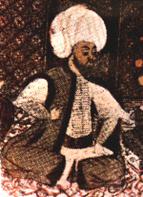
    Al-Kindi also attempts to make reference to the ‘Teleological Proof’ (dalil al-‘indyah) for the existence of God.  
    Al-kindi.jpeg
    As he argues that “the orderly and wonderful phenomena of nature could not be purposeless and accidental”. It is also supported by Iqbal.  The two cases, the ‘clock’ and the ‘universe’, are however, different. Unlike the case of the clock, where its builder put the complex machine together given pre-existing material, the universe and its material itself created by God also. That is, there is no point in finding it extra-ordinary that God would be able to organize pre-existing “intractable” (difficult to mold or manipulate) material in such an elegant fashion. The only reason we would have of thinking so, would be if it was a difficult task to design the universe. But then why would God, first create a difficult task for Himself and then go on resolve the difficulty by arranging into a sophisticated pattern? In addition, God would be limited in what He could create by this pre-existing material. This, to Iqbal, does not seem consistent with the Islamic concept of an omnipotent God. Iqbal writes, perhaps in response to Paley, “There is really no analogy between the work of the human artificer and the phenomena of Nature.” Both Iqbal and Russell point out that it is inappropriate for a person who believes in God to put forth an argument for His existence on teleological grounds. The British philosopher David Hume rejected the teleological argument, for different reasons. For him the argument from the best explanation is an inductive argument (Marked by or involving inference), and Hume had argued that inductive knowledge and causation is not possible. 

    Most Muslim philosophers have attempted to get around this vexatious (persistently disturbing or worrisome) problem by simply recognizing the Qur’anic emphasis on the uniformity of nature, accepting it as such and thus avoiding this problem. The Qur’an says: “Not for (idle) sport did We create the heavens and the earth and all that is between!”  (Qur’an;21:16). The Qur’an says: “Verily in the heavens and the earth are Signs for those who believe. (Qur’an;45:3). “And in the creation of yourselves and the fact that animals are scattered (through the earth) are Signs for those of assured Faith. And in the alternation of Night and Day and the fact that Allah sends down Sustenance from the sky and revives therewith the earth after its death and the change of the winds are Signs for those that are wise. (Qur’an;45:4-5).  The above problem of induction gave rise to modern skepticism (feeling of uncertainty about a situation : misgivings, doubtfulness,) and remains a fascinating unsolved puzzle.  
    Immanuel Kant: (1724-1804 C.E):
    He was the German idealist (an imaginative or idealistic but impractical person), philosopher. He was, one of the foremost thinkers of the Enlightenment. He argued that reason is the means by which the phenomena of experience are translated into understanding raises a powerful objection to any theory that claims to grasp knowledge of God. He claims that in terms of knowledge there can be no jump from the physical to the metaphysical. Kant distinguishes between ‘noumenal’ and ‘phenomenal’ objects. An object that can be intuited only by the intellect and not perceived by the senses. The noumenonal are objects that lie beyond all possible experience, and the phenomena are the ones we directly experience. Hence, for him the metaphysical is the noumenonal realm. He argues that there can be no possible relation between two realms that have no connection between them. He questions that how can we prove that a certain noumenonal object exists from phenomenal premises?. 

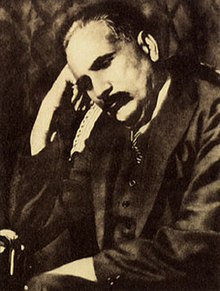
    Iqbal:
    Iqbal responds to Kant’s criticism of metaphysical existence from empirical (experimental, pragmatic) experience: “Kant’s verdict can be accepted only if we start with the assumption that all experience other than the normal level of experience is impossible. 
    Iqbal.jpg

    The only question, therefore, is whether the normal level is the only level of knowledge-yielding experience?” He argues that there are other levels of experience that can bear knowledge as well.   It is pertinent to note that according to Qur’an the ‘reason’ properly used must lead man to cognition of God’s existence and, thus of the fact that a definite plan underlines all His creation; reward for pious believers and punishment for rebellious non believers and sinners: “And they (disbelievers) will add: “Had we but listened (to those warnings). Or (at least) used our own reason, we would not (now) be among those who are destined for the blazing flame!”(Qur’an; 67:10). 

    Ontological Arguments: 
    Anselm’s Argument: 
    The modern form of the ontological argument in modern western philosophy was made famous by St.Anselm (1033-1109 C.E) and Descartes (1596-1650). The argument rests on the premise that existence is a predicate that a being could have or lack. Anselm’s argument can be summarized as: “God is a being than which nothing greater can be conceived, a being than which nothing greater can be conceived to exist in our thought. Either a being than which nothing greater can be conceived exists in thought alone and not in reality or a being than which nothing greater can be conceived exists both in thought and in reality. If the greatest conceivable being existed in thought alone we could think of another being existing in both thought and reality. Existing in thought and reality is greater than existing in thought alone. Therefore: A being than which nothing greater can be conceived (God) exists in thought and in reality.”  
    Simply by pure reason, without any reference to the world, Anselm argues for God. A key feature of these kinds of arguments is that they try to show not only that God exists, but that he necessarily exists. That is, He cannot, not exist. The existence of God is an essential feature of its being just like the angles of a triangle always add up to 180 degrees. It would be impossible to think of God without it existing. Descartes [French mathematician, scientist, and philosopher, considered as the father of modern philosophy] writes: “From the fact that I cannot think of a mountain without a valley, it does not follow that a mountain and a valley exist anywhere, but simply that a mountain and a valley, whether they exist or not are mutually inseparable. But from the fact that I cannot think of God except as existing, it follows that existence is inseparable from God. Hence, the very essence of God, to even make the concept of God intelligible it must exist”. 

    Criticism: 
    This argument has been widely criticized. Kant criticized the argument from two perspectives.   First he points out that, although, the concept that all three sides of the triangle add up to 180 is an analytical concept, there is still nothing that shows that it must exist. Similarly the idea that existence analytically belongs to the concept of God is an illegitimate inference. He writes: “To posit a triangle, and yet to reject its three angles, is self-contradictory; but there is no self-contradiction in rejecting the triangle together with its three angles. The same holds true of the concept of an absolutely necessary being”. Secondly, he rejects Descartes argument on the grounds that existence is not a predicate that can be added or taken away from a concept. That is; existence is not like any of the other properties that are associated with ‘things.’ To say that something exists, is simply to say that the concept is instantiated in the world. He claims this on the basis of his distinction between analytic and synthetic statements. An analytic statement is one of the kinds, “all bachelors are unmarried males,” or “the sum of the angles of a triangle is 180.” In these statements the predicates, “unmarried males” or “sum of angles is 180” does not add any new information to the concept of “bachelors” or “triangle.” Analytic statements are true by virtue of their meaning alone. 

    Synthetic Statement:
    A synthetic statement is something that adds more information about the object in question. For example, “all ravens are black,” is synthetic.  The predicate “are black” tells us more information about the subject “ravens.” Kant’s claim is that statements of the sort, “X exists” are analytic. It does not add anything additional to the concept. Hence the inference that existing in reality is greater than existence in thought alone is false. The reduction of absurdum from pure thought to God, of Anselm (1033-1109 C.E) and Descartes (1596-1650 C.E) thus fails according to Kant. The closest form of parallel thought to this can be found in the thought of Avicenna [Ibn Sīnā ;980-1037 C.E, philosopher and scientist] who proposed a somewhat similar ontological argument for the existence of God. 
    Avicenna Portrait on Silver Vase - Museum at BuAli Sina (Avicenna) Mausoleum - Hamadan - Western Iran (7423560860).jpg
    Avicenna also propounded that God is a necessary being; however, his argument unlike Descartes is not a purely rational one. Avicenna believed that we possess a direct intuitive apprehension of the reality and existence of this necessary being. He believed that it would be impossible to think concretely without the existence of such a being. Averroës [Ibn Rushd-1126-1198 C.E; trained in law, medicine, and philosophy, rose to be chief judge of Córdoba. His series of commentaries on most of the works of Aristotle, written between 1169 and 1195, exerted considerable influence on both Jewish and Christian scholars in later centuries], however, insists that there can be no rational proof for God’s existence and it can only be grasped via the medium of intuition.

    Thoughts of Muslim Philosophers on ‘GOD’:

    The God that Avicenna argues for is a Necessary Being. A being that necessarily exists, and everything else besides it is contingent and depends upon it for its existence. God has no other essence besides his existence.  His essence (Mahiyah: Quidditas), just is His existence.  Since, God is the only being in which the essence and existence are to be found together, the essence of all other beings precedes their existence. Thus He is absolutely simple, and no has no further attributes. In his book ‘al-Shifa’ Avicenna explains that since the ‘Necessary Being’ has no genus or differentia it is both indefinable and indemonstrable. As such “neither its being or its actions can be an object of ‘Discursive Thought’ (proceeding to a conclusion through reason rather than intuition.), since it is without cause, quality, position or time.” All other entities do not exist necessarily or essentially, rather they are merely contingent beings (per accidents).   
    The characteristics of God offered by Avicenna drew major criticisms from the contemporary Muslim orthodoxy, who found his definition incompatible with Islamic doctrine. “..If there be (but) the weight of a mustard-seed and it were (hidden) in a rock or (anywhere) in the heavens or on earth Allah will bring it forth: for Allah understands the finest mysteries (and) is well-acquainted (with them).”(Qur’an;31:16).How can God be omniscient if He has no attributes? He does try to explain, however, how his description would be compatible with God having knowledge of the world. In knowing Himself, God is capable of knowing everything that emanated from Him.  Since God does not have sense-perceptual knowledge He cannot know the particulars, but rather only the essences or universal principles. But according to Avicenna this does not exclude him knowing the specifics of any given event. Knowing all the antecedents and consequences in the causal chain, allows God to place the event temporally and differentiate it from all other events. Hence, his theory does not preclude God’s knowledge of the specifics. Al-Ghazzali (1058-1111C.E) was not satisfied with this account and criticized Avicenna stating that the theory being presented would not allow for change in divine knowledge with the introduction of the time factor.   

    Criticism of ‘Perpetual Universe’: 
    Another important characteristic of Avicenna’s ontology was the fact that he believed that the universe is eternal. This was another belief, which was not acceptable to the Islamic orthodoxy. He thought the creative ability of God was linked to His intellectual nature and thus flowed eternally of rational necessity from Him. Although the universe exists as an independent body, its existence is still contingent upon God. God and the world are different, but the existence of the world depends upon God. This can be seen as refinement, or rather ‘Islamisation’ of the Aristotelian views that God and the universe were two distinct beings which did not interact with each other. What is, in different ways, implied by these arguments is that the word God is unique in its logic, that it works in discourse as no other word exactly works. Thus, one cannot say "God exists" but rather "God necessarily exists." This is sometimes expressed by remarking that the existence of God is not the existence of a physical object or even the existence of a person, though what can be said about persons is less misleading in speaking about God than in speaking about the logic of things. This point is sometimes made, albeit misleadingly by saying that God does not exist, but this is only a picturesque way of saying that he does not exist in the way that a table exists. 

    Verifiable Evidence: 

    The Verifiable Evidence is the blend of all the three i.e. Cosmological, Teleological and Ontological Arguments.

    Proof of Existence of God through Scientific Facts in Qur’an: 

    Islam encourages reasoning, discussions and dialogues. The Qur’an contains more than 6000 verses (ayaats-‘Signs’) out of which more than thousand refer to various subjects of science, such as Astronomy, Physics, Geography, Geology, Oceanology, Biology, Botany, Zoology, Medicine, Physiology, Embryology as well as General Science, mostly unknown to humanity fourteen centuries ago. It may be kept in view that Qur’an is not a book of ‘science’, but a book of ‘signs’ i.e. a book of Ayaats. It is found that the Qur'anic information on science does not conflict with the established scientific facts. It may go against certain scientific hypothesis or theories, which are not grounded in facts as many a times, the science retract its position. 

    Many facts mentioned in the Qur’an have been discovered in the last few centuries. But science has not advanced to a level where it can confirm every statement of the Qur’an concerning science. According to Dr.Zakir Naik; suppose 80% of all that is mentioned in the Qur’an has been proved 100% correct, while for the remaining 20%, science makes no categorical statement, since it has not advanced to a level, where it can either prove or disprove these statements. With the limited knowledge through science available today one cannot say for sure whether even a single percentage or a single verse of the Qur’an from this 20% portion is wrong. Thus when 80% of the Qur’an is 100% correct and the remaining 20% is not disproved, logic says that even the 20% portion is correct.  The details of scientific facts mentioned in Qur’an are available in the book ‘Qur’an and Science’ by Dr.Zakir Naik & "The Bible, The Qur'an and Science" by Dr. Maurice Bucaille, details follows. [Read more: Scientific Facts in Qur’an on Universe & Conclusion ]

    ~ ~ ~ ~ ~ ~ ~ ~ ~ ~ ~ ~ ~ ~ ~ ~ ~  ~ ~ ~  ~
    Humanity, ReligionCultureSciencePeace
     A Project of 
    Peace Forum Network
    Books, Articles, BlogsMagazines,  Videos, Social Media
    Overall 2 Million visits/hits
    http://JustOneGod.blogspot.com
    ~~~~~~~~~~~~~~~~~~~~~~